RV Trade In Value: How Dealers Price Your Rig and How to Get a Fair Number
By Wade Hollister · October 21, 2026
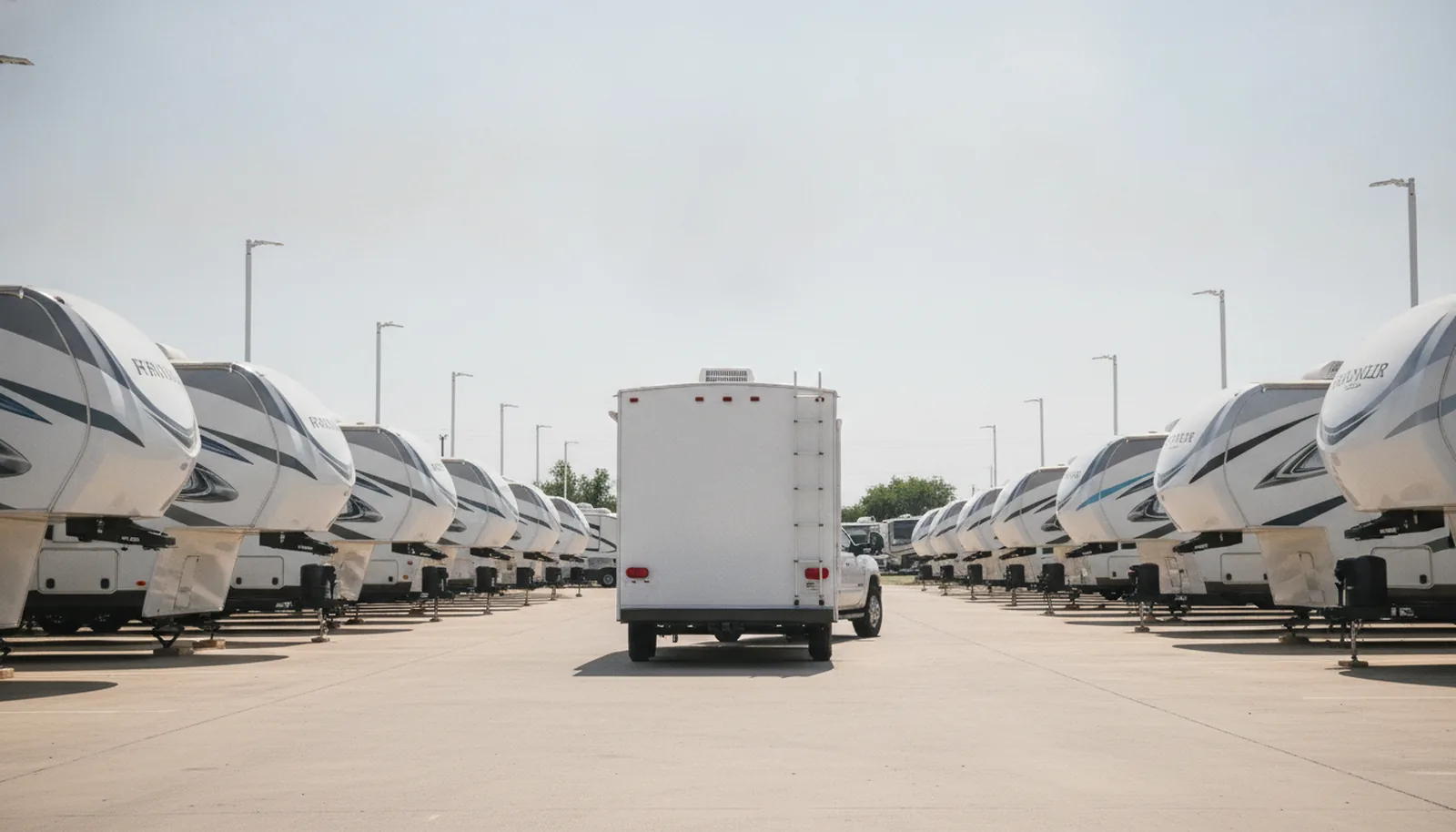
Last June I watched a used manager knock $6,000 off a trade-in offer because of a soft spot under the dinette. The floor felt fine to me. He pressed it with his thumb, heard the plywood crumble, and walked out of the bay shaking his head. Water damage is the appraiser’s sledgehammer. When you understand how dealers like RV dealers in Houston and everywhere else build a trade number, you can walk in prepared instead of hoping for mercy.
Dealers don’t buy your rig the way private buyers do.
How a dealer arrives at an RV trade in value
A trade offer sits near wholesale, not retail.
At the lots where I sold in Fort Worth, the used manager used three things to start: J.D. Power values (the old NADA Guides number), recent auction results for similar rigs, and what comparable units were actually selling for in our market.
What he looked at first: the roof and caulking, then every inch of floor for soft spots, then the slides, then tires with the four-digit DOT date code, then the appliances and generator hours. Smell counted too.
The floor plan mattered more than the age, and season and local demand moved the number as much as condition did. A bunkhouse travel trailer in May sold fast. That same bunkhouse in November sat until spring, and the offer dropped to cover that floor-plan interest. Season and local demand move the number as much as condition does, which is why the appraiser walks the rig with a checklist in his head.
What the appraiser checks, item by item
Here’s my mental checklist after watching dozens of appraisals and doing a few myself for the used lot:
| Area | What kills the offer | Cheap fix that helps |
|---|---|---|
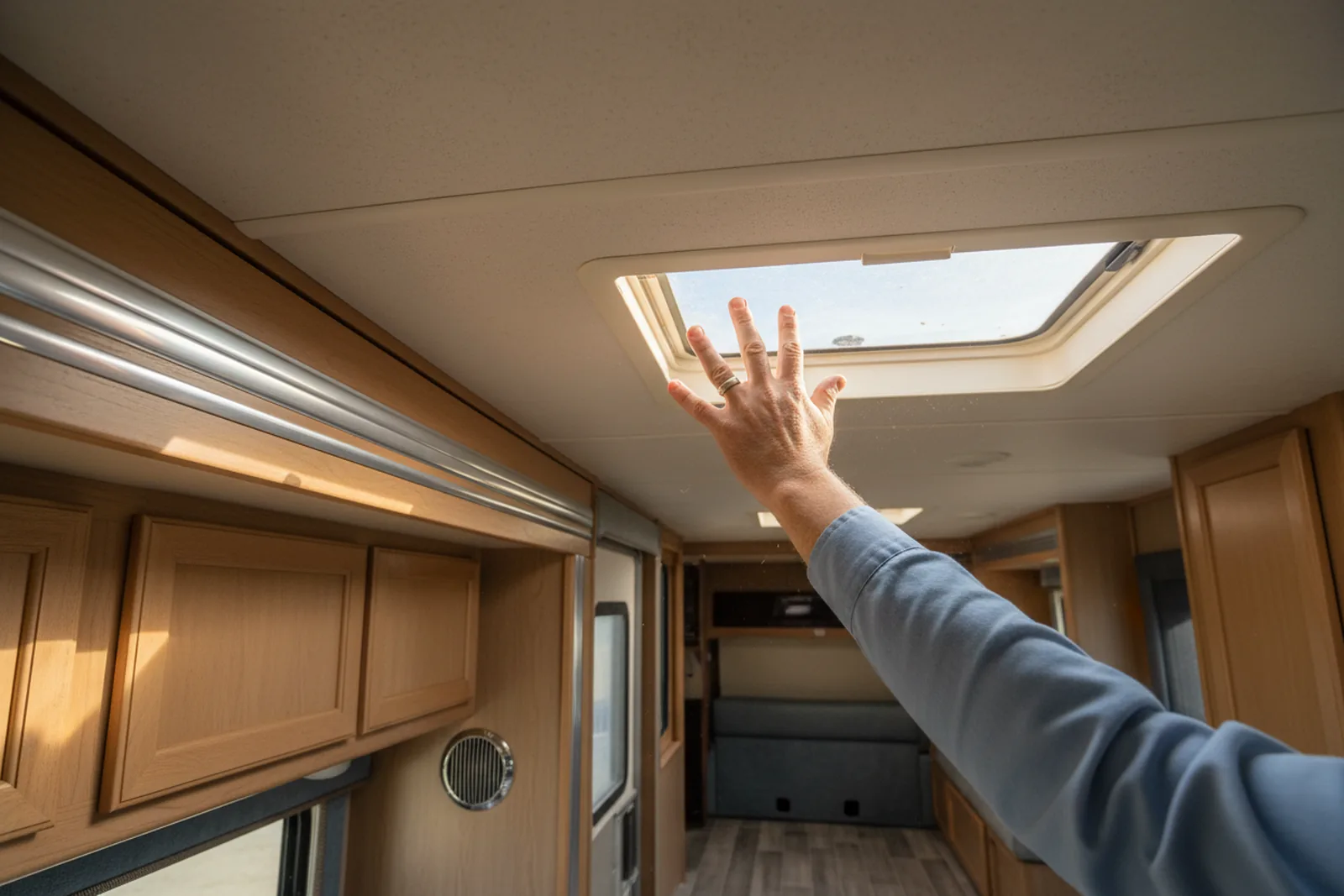
| Roof and sealant | Cracks, peeling lap sealant, soft edges | Clean and recaulk around every penetration |
| Floors | Soft spots, warp, musty smell | No cheap fix for rot; know it’s there and price it in |
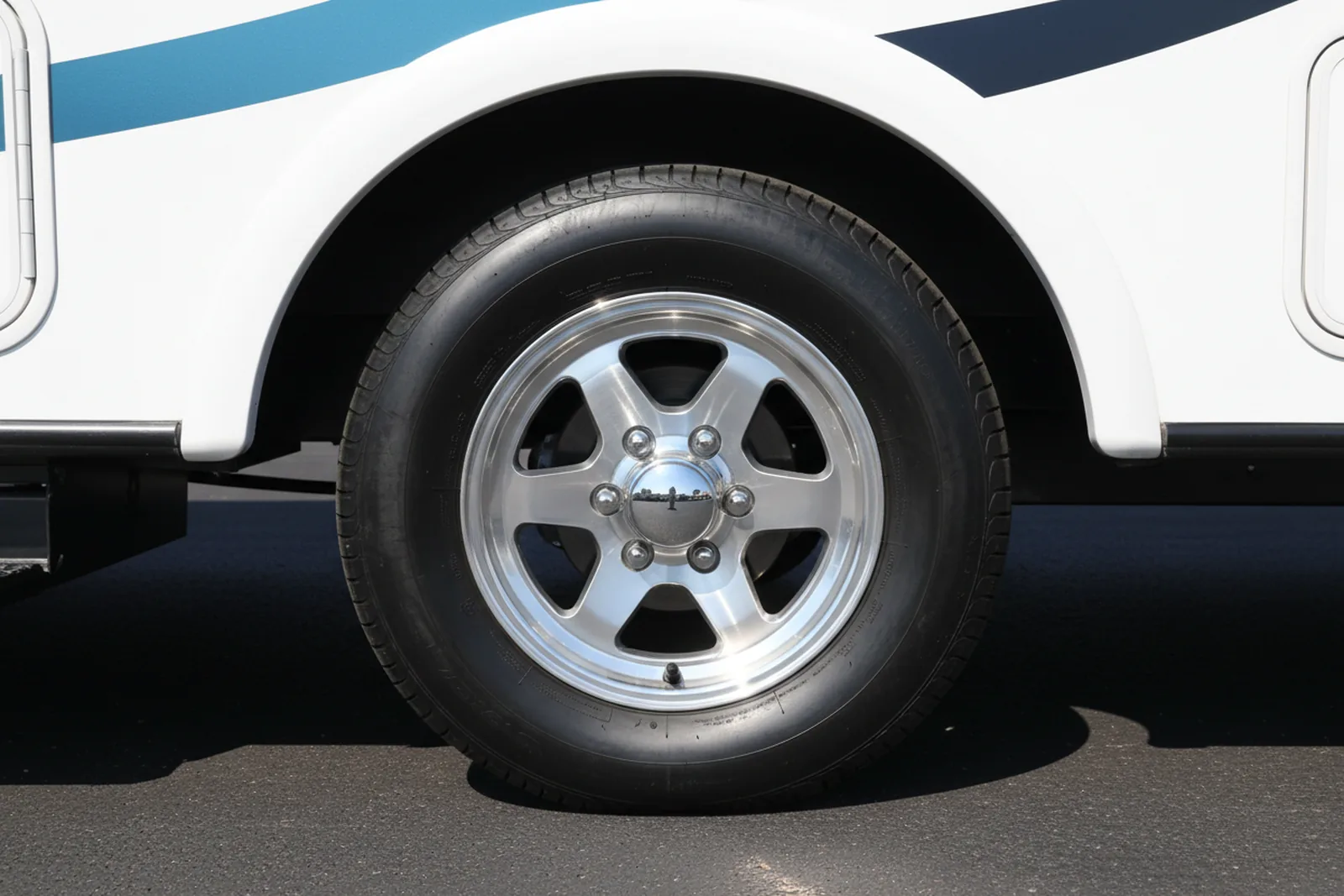
| Tires | DOT date code older than 5 to 7 years, cracks | New rubber, or at least know your date codes |
| Slides | Worn seals, sticking motors | Clean and lube the mechanism, condition the seals |
| Appliances | Absorption fridge dead on propane, AC weak | Run everything on both propane and shore power |
| Generator | High hours, no records | Change oil, record hours |
| Interior | Cigarette smoke, heavy pet odor | Ozone machine, deep clean, replace cushions |
| Title | Lien paperwork missing, salvage brand | Have your payoff letter and title ready |
One time a guy brought in a clean 2018 fifth wheel. Records say “this rig wasn’t neglected,” and that’s worth real money. But a clean rig only helps if you see the trap coming on the sales floor.
The four-square and the high trade allowance trap
The classic sales tool is the four-square: a sheet with boxes for price, trade-in, down payment, and monthly payment.
Here’s the trap to watch: a salesman offers you $35,000 for you’re trade when you expected $30,000, then won’t take a dime off the sticker on the new unit. You didn’t win $5,000. It was just moved to a different box.
The fix: negotiate the new unit first, get a written out-the-door price, then bring up the trade. If they won’t do that, ask for two numbers: the price with no trade and the price with trade. That’s your real trade offer.
I watched a customer learn this the hard way. He took the big trade number and never noticed the new unit was priced at full MSRP. He left about $4,000 on the table, and that was before the finance office started talking about his lien.
Negative equity, lien payoff, and the sales tax break
Half the trade-ins I saw had a lien on them.
Negative equity is a buzzsaw. Don’t let the finance office call it “just a little extra per month.”
Now the good news: many states give you a sales tax break on trades. You pay tax only on the difference between the new price and your trade allowance. Here in Texas I had one buyer save abotu $2,100 that way. California taxes the full price, and a few other states do too, so check yours before you assume.
A trade offer of $30,000 in a state with a 6% sales tax rate saves you $1,800 in tax. That makes the trade worth $31,800 compared to selling private-party and paying full tax on the new one. But none of that matters if the rig shows up looking like you’ve been living in it hard.
Prep work that actually raises the number
The appraiser forms a first impression in thirty seconds.
Fix the cheap stuff. Replace a broken cabinet latch. These small fixes signal that you maintained the rig.
Bring records: oil changes, bearing repacks, roof reseals, tire purchases. Both sets of keys, all manuals, and the title if you own it free and clear. If there’s a lien, bring the lender’s name, account number, and payoff quote.
My old boss would add $500 just for a rig that showed up clean with records. He’d subtract $2,000 for one that showed up with dog hair and a full black tank. If you’d rather skip the trade entirely, there’s another door.
Selling outright to a dealer without buying
Dealers buy RVs outright all the time, especially in spring when their used inventory is low. The offer is usually at or below a trade-in allowance because there’s no new unit sale to sweeten the deal. But it’s fast, there’s no tire-kicking, and you don’t have to answer forty messages from strangers online.
If you’re selling outright, get offers from at least two or three RV dealers across Texas or wherever you live. Tell the first one you’re getting multiple offers, and ask for their number in writing. A written offer carries more weight than a handshake.
One alternative is consignment, where a dealer sells your rig for you and takes a cut. I wrote a full guide to RV consignment with the contract terms to watch. Consignment can net more than a trade but takes longer and depends on the dealer’s traffic and honesty.
The used manager at one lot I worked at would buy clean, well-documented towables outright on a Wednesday and have them sold by Saturday during spring. He paid more for those because he knew they’d move fast. Most offers don’t look like that, and there’s a reason.
The real reason dealers lowball and what to do about it
Dealers have to make a profit on your trade. That’s not greed; it’s how a business stays open. The used manager’s goal is to buy your rig for less than he can sell it for, after spending money on reconditioning. If you want that profit for yourself, sell private-party and deal with the strangers and the test tows.
I’ve seen plenty of offers land well under what the lot planned to list the rig for. The gap pays for reconditioning, advertising, flooring interest, and the salesman’s commission. On a rig they’d list at $50,000, a trade offer around $35,000 wouldn’t shock me. That’s the wholesale reality.
To fight a lowball, get a realistic value before you walk in. Check J.D. Power, look at comparable listings, and understand how depreciation hits your specific rig. Then get offers from two or three dealers. Tell them you’re shopping the offer. The market is small enough that they know you’ll find a better number if it’s out there.
One trick I used as a buyer: I’d tell the salesperson, “I have a written offer from another dealer for $34,000. Can you beat it?” Half the time they’d come up $1,500 just to keep the deal alive. That’s the kind of weekend work I’d do myself.
I found a video that shows the process from the salesman’s side. It’s worth a watch before you walk in.
What I’d do this weekend if I were trading in my rig
I’d pull out my title or my lender’s payoff quote, and I’d clean the rig like my mother was coming to inspect it. Then I’d fix every cheap, obvious problem I could find: caulk, cabinet latches, a loose grab handle. I’d write down every system that works and every repair I’ve done with dates.
Then I’d take two hours and get written trade offers from two different dealers. Not just phone calls. Written numbers, with the new unit price broken out separately. If one dealer won’t seperate the numbers, walk. If one offer is way low, show it to the other and see if they’ll move.
That’s the whole game: know what your rig is worth, make it easy to appraise, and don’t let the numbers mix togther. The dealer’s job is to make a profit. Your job is to make sure that profit is fair.
Related reading
FAQ
Why is my RV trade-in value less than what I see them selling for?
A dealer's trade offer is wholesale, not retail. The dealer has to recondition the rig, hold it for weeks or months while paying floor-plan interest, and still make a profit when reselling. The gap between private-party value and trade value offen is a big chunk of money, and how big depends on the rig, the market and the season.
What hurts RV trade-in value the most?
Water damage and soft floors top the list. A used manager can drop an offer by thousands for one soft spot. After that: tires older than 5 to 7 years by DOT date code, smoke or pet odor, non-working slides or appliances, and high generator hours without records.
How do I negotiate a better trade-in number?
Negotiate the new unit's price first, then introduce the trade. Ask for a written offer with the new price and trade value listed separately. Get offers from two or three dealers and tell them your shopping the number. Clean the rig, bring records, and fix cheap problems befor the appraisal.
Should I sell my RV myself instead of trading it in?
You'll usually net more money in a private sale, but you deal with advertising, strangers, negotiating, and payment risk. A trade is faster and often yields a sales tax break depending on your state. Consignment is a middle path: the dealer sells it for a fee, and you net less but avoid the hassle.
What happens to my RV loan when I trade it in?
The dealer pays off your lender as part of the deal using the trade-in value toward that payoff. If you owe more than the trade offer, the negative equity gets rolled into your new loan unless you pay it separately. Ask for proof that the payoff was sent and the lien released.
Does trading in my RV reduce sales tax on the new one?
In many states, yes. You pay sales tax only on the difference between the new RV's price and your trade allowance. For example, a $30,000 trade on a $60,000 RV in a 6% state saves you $1,800 in tax. But states like California tax the full price. Check your state's rule.
How do I find the true value of my used RV before a trade?
Start with J.D. Power values (formerly NADA Guides) for a baseline. Then search listings for the same year, floor plan, and condition within 200 miles. Finally, get written trade offers from two or three dealers. The real number is where those offers cluster, not what a guide says.
Find RV dealers near you
Compare new and used RV dealerships in your city, then ask a few what they have in stock.
Browse by stateOr jump to: Tucson, AZ · Phoenix, AZ · Sacramento, CA