RV dealer fees: doc, prep, freight and the add-ons to question
By Denise Kowalski · October 21, 2026
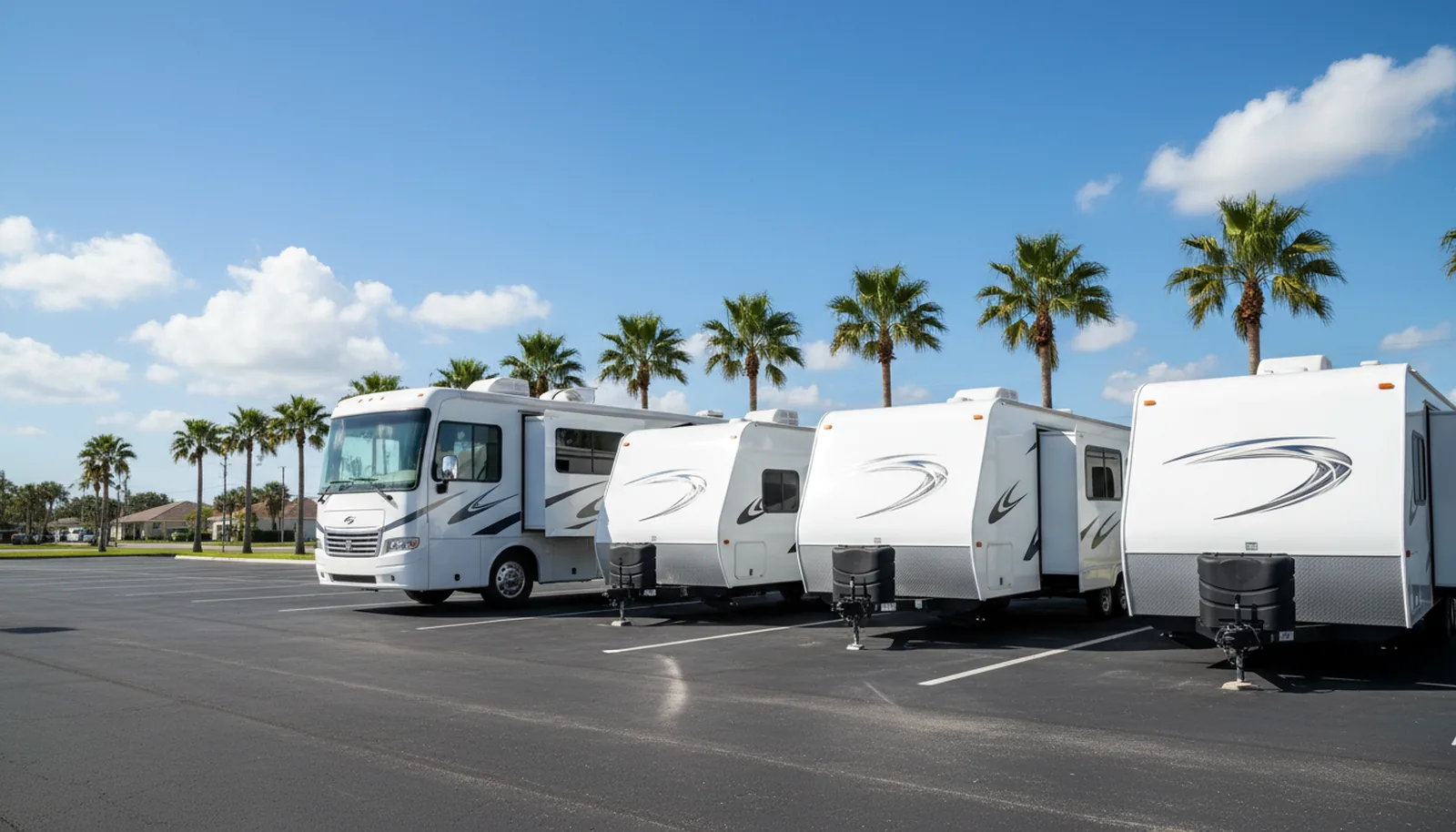
Last spring I watched a couple sign a buyer’s order on a $92,000 fifth wheel. They did not see the $1,795 prep fee until the finance manager tapped it with his pen. It sat one line above the tax, same typeface as everything else. They had driven over from Tucson to look at inventory, and the sales manager’s four-square had the fee buried so neatly it might as well have been invisible. Nine years in that chair and I can tell you RV dealer fees are where the desk builds its profit. Ask the RV dealers in Tampa for an itemized quote and you’ll see a similar list. Doc, prep, freight, maybe a sealant package. Some are real costs. Some are pure markup. You need to know which is which before you sign anything.
I call it the out-the-door test: same rig, same options, three dealers, each gives you a written itemized number. Compare the total, not the discount off MSRP. I’ll walk you thru every fee I’ve watched buyers miss, which ones you can push on, and the one question that saved a Tampa winter visitor over two grand.
What are RV dealer fees?
RV dealer fees are the charges added to the selling price that aren’t sales tax, title, or registration. Different lots use different names: doc fee, processing fee, prep, PDI, freight, destination, setup, orientation, nitrogen tires, fabric protection, and a dozen others. Some cover real work. Some are just profit. You find out which by reading the buyer’s order line by line before you sign.
At the stores where I worked, the doc fee ran $399 to $799 on every deal. Prep varied by unit, usually $500 to $1,200. Freight on a travel trailer from northern Indiana to Phoenix always showed up on the sheet, often $1,500 to $2,500. Add-ons were extra, sold in the F&I office.
A dealer can call a fee anything they want; the total out-the-door number is the only thing that matters. I’d rather pay a $999 doc fee on a rig priced $4,000 below market than a $199 doc fee on a rig priced at sticker.
RV dealer fees: government charges vs. dealer charges
Sales tax, title, and registration come from your state, county, or city. Not one penny goes to the dealer. Those numbers should match what the DMV or county assessor says, and you can check them before you buy. Some states charge registration on value, some on weight or age, some a mix. When I worked with out-of-state buyers, I told them to check the rules where they’d register the RV, not where they bought it.
Dealer charges are anything the store adds for its own reasons. Doc fee, prep, freight, setup, every add-on. They’re all numbers the sales manager can move. Not always by deleting the line, but by discounting the unit price or bumping the trade-in allowance to offset them. Ive watched a sales manager cut a $1,200 prep fee to $400 because the buyer asked for the out-the-door number in an email and compared it with another store.
Use this table to sort it out when you see a buyer’s order:
The fee table: what it is and whether you can push back
| Fee | What it covers | Government or dealer | Negotiable? |
|---|---|---|---|
| Sales tax | State and local tax on the purchase | Government | No |
| Title and registration | DMV paperwork and plates, varies by state and weight | Government | No |
| Doc fee | Dealer’s charge for processing paperwork | Dealer | Usually not removable, but can be offset by a discount on the price |
| Prep / PDI fee | Cleaning, inspecting, and pre-delivery work | Dealer | Yes, through the bottom line |
| Freight / destination | Cost to ship the RV from the factory, mostly from northern Indiana | Dealer | Yes, but consider the total price, not just this line |
| Setup / orientation | Showing you how things work before you drive off | Dealer | Yes, sometimes waived if you ask |
| Sealant package | Coating for exterior or roof seams | Dealer add-on | Optional, often overpriced |
| Nitrogen-filled tires | Filling tires with nitrogen instead of air | Dealer add-on | Optional, skip it |
| Theft etching | Etching a code into windows to deter theft | Dealer add-on | Optional, nearly pure profit |
| Interior protection | Fabric or leather coating | Dealer add-on | Optional, skip it |
| House battery | Some towables are sold without one, so it’s added as a line | Dealer | Part of the real price, but shop the cost |
Every dealer-set number can be questioned. I can’t give you a firm percentage off because margins vary by model and by month; the best benchmark is a written quote from another dealer on the same or comparable unit.
Which fees can you negotiate?
All of the dealer’s own charges are negotiable in practice. Some dealers will tell you the doc fee is fixed because they charge everyone the same. That’s often true. But the sales manager can discount the selling price by the same amount if they want the deal. I’ve done it a hundred times. You want to negotiate the out-the-door total, not any single fee.
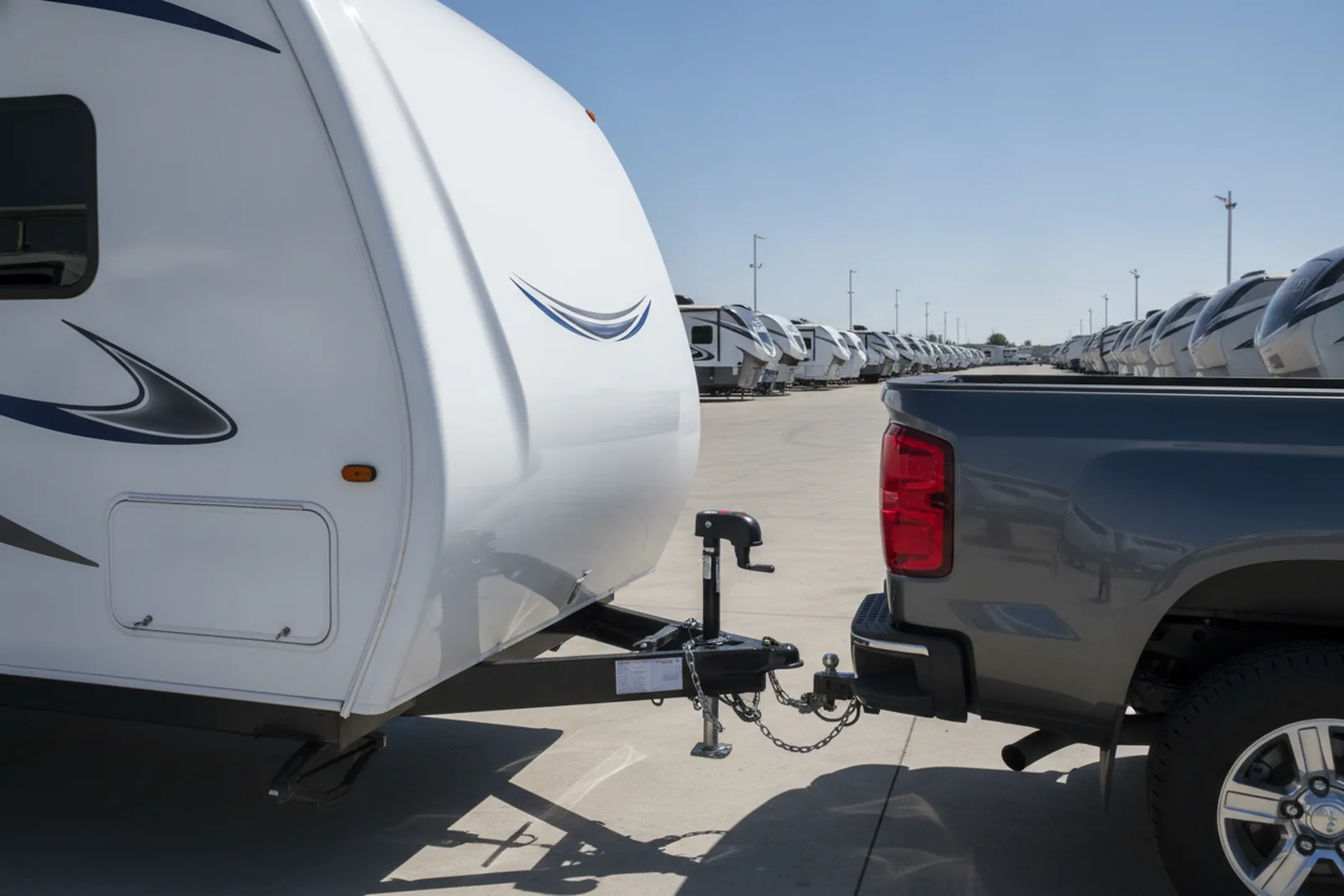
Freight is a real cost. Most RVs are built around Elkhart, Indiana, and shipping a 35-foot fifth wheel to Phoenix or Tampa isnt cheap. But a dealer who says freight is a law you must pay is wrong. It’s part of their cost, and they can absorb it by lowering the unit price. When you email for a quote, ask for the total including all fees, not just the sale price.
Add-ons like sealant packages, nitrogen, and theft etching are almost never worth what they charge. A $995 sealant coating costs the dealer a fraction of that in product and labor. If it was already applied, ask for it off the price. If it hasn’t been applied, tell them you don’t want it. I’ve seen a buyer save $1,700 just by crossing out three add-ons and initialing the change.
I found a video on common dealer traps and how to get a better price, worth a watch before you sign anything.
The out-the-door email trick that saved a Tampa customer
Two winters ago a couple from Minnesota drove their Class C down to Florida and decided to trade up to a larger gas Class A. They walked into three diffrent RV dealers across Florida and got three different numbers. The first dealer quoted $142,000 plus a $399 doc fee and $1,995 in freight and prep. The second quoted $139,500 with $899 doc and $2,400 freight. The third wouldn’t give a written quote at all, just a monthly payment.
I told them to email each dealer asking for the same unit, same options, with an itemized out-the-door price including all fees, sales tax, and registration. The first dealer came back at $142,250 before tax and registration, after dropping the prep fee and shaving the price. The second matched it. They bought from the first because it was closer to their seasonal park.
That question saved them just over $2,100. Not because they were great negotiators. Because the written quote forced each dealer to show their hand. Before you drive to any lot, do the same. If a dealer won’t give you a written quote by email, that’s information too.
Read the buyer’s order line by line before you sign
The buyer’s order is the contract. Everything on it is what you owe. I’ve sat next to buyers who signed a $60,000 deal and later called to ask what the $1,295 charge was. It was there on the sheet, same typeface as everything else. They just didn’t stop to read it.
Get you’re time. Circle every fee you didn’t agree to. Ask what each one covers. If the answer is vague, ask to see it in writing. At the dealerships where I worked, we gave buyers a copy of the order to review befor signing. You can always ask for that.
One thing to watch: a dealer might put a higher trade-in allowance on the sheet but keep the fees high, so the out-the-door is no better. Or lower the fees and take it out of your trade. The only number that matters is the difference between the new unit price and your trade, plus taxes and fees. Do that math yourself, on paper, before you sign.
Never sign a buyer’s order with a blank line in the fees section. If a fee is zero, have them write zero. If they say it’ll be filled in later, don’t sign. I’ve seen too many buyers come back to a $500 fee they never agreed to.
What I’d do before I bought another RV
I’d start with a written quote from three dealers on the exact same unit. I’d compare the out-the-door total, not the discount percentage. Then I’d negotiate the trade-in after the price is set, and financing after that. Never mix those numbers on the same sheet.
This weekend, pull up dealers near you. Pick a specific new or used rig they all carry. Send the same email to each one asking for an itemized out-the-door price. See who answers. That one step will tell you more about which dealer is straight with you than any review.
If a dealer won’t put it in writing, I’d drive somewhere else. I own a 2018 Class C and I still send that email before I talk numbers on anything.
Keep reading
FAQ
What is a reasonable doc fee for an RV?
Doc fees are commonly a few hundred dollars and can run higher. A few states cap them or set disclosure rules, many don't. Ask the dealer what it covers; sometimes it includes title work, temporary plates, and courier costs. If it's high, ask for an equal discount on the unit price. The total matters more than the label.
Is the freight charge on an RV real?
Yes, shipping an RV from the factory costs money. Most towables and many motorhomes are built in northern Indiana, and hauling one to Arizona or Florida often costs well over a thousand dollars. But freight is just part of the dealer's cost, like rent or payroll. You can ask them to lower the price to offset it.
What is a prep or PDI fee?
Prep or PDI (pre-delivery inspection) is the dealer's charge for washing, inspecting, and getting the unit ready for delivery. It usualy runs several hundred dollars and sometimes over a thousand. Some dealers do a thorough job; some don't. You can negotiate it down, especially if you see the same unit listed at another dealer without that fee.
Are RV dealer add-ons like sealant packages worth it?
Almost never at full price. Sealant packages, nitrogen tires, theft etching, and interior protection are high-margin products. A sealant coating can sell for close to a thousand dollars and cost the dealer a small fraction of that. If it's already on the unit, ask to remove the charge. If not, decline. You can often buy the same protection later for less.
Can I negotiate taxes and registration fees?
No. Sales tax, title, and registration are set by your state or local government. The dealer just collects them on their behalf. Those numbers shoudl match what the DMV says. If they're wrong, ask for a breakdown. But the dealer doesn't control or profit from them.
What should I ask for before visiting a dealership?
Email the dealer and ask for a written, itemized out-the-door price on a specific unit: sale price, every dealer fee, sales tax, and registration. That number is the real comparison. If a dealer won't give it by email, they may be hiding somthing. You can also ask if they'll match a competitor's quote.
Do I have to buy an extended warranty at the RV dealer?
No. Extended service contracts are optional and can often be purchased later from the dealer or a third party while the unit is still within age limits. Rolling it into the loan means paying interest on it. Read the contract's exclusions and deductible before agreeing. The finance manager earns commission, so prices are negotiable.
Find RV dealers near you
Compare new and used RV dealerships in your city, then ask a few what they have in stock.
Browse by stateOr jump to: Elkhart, IN · Oklahoma City, OK · Fort Myers, FL