RV Extended Warranty Cost, Coverage, and When It's Worth It
By Denise Kowalski · October 21, 2026
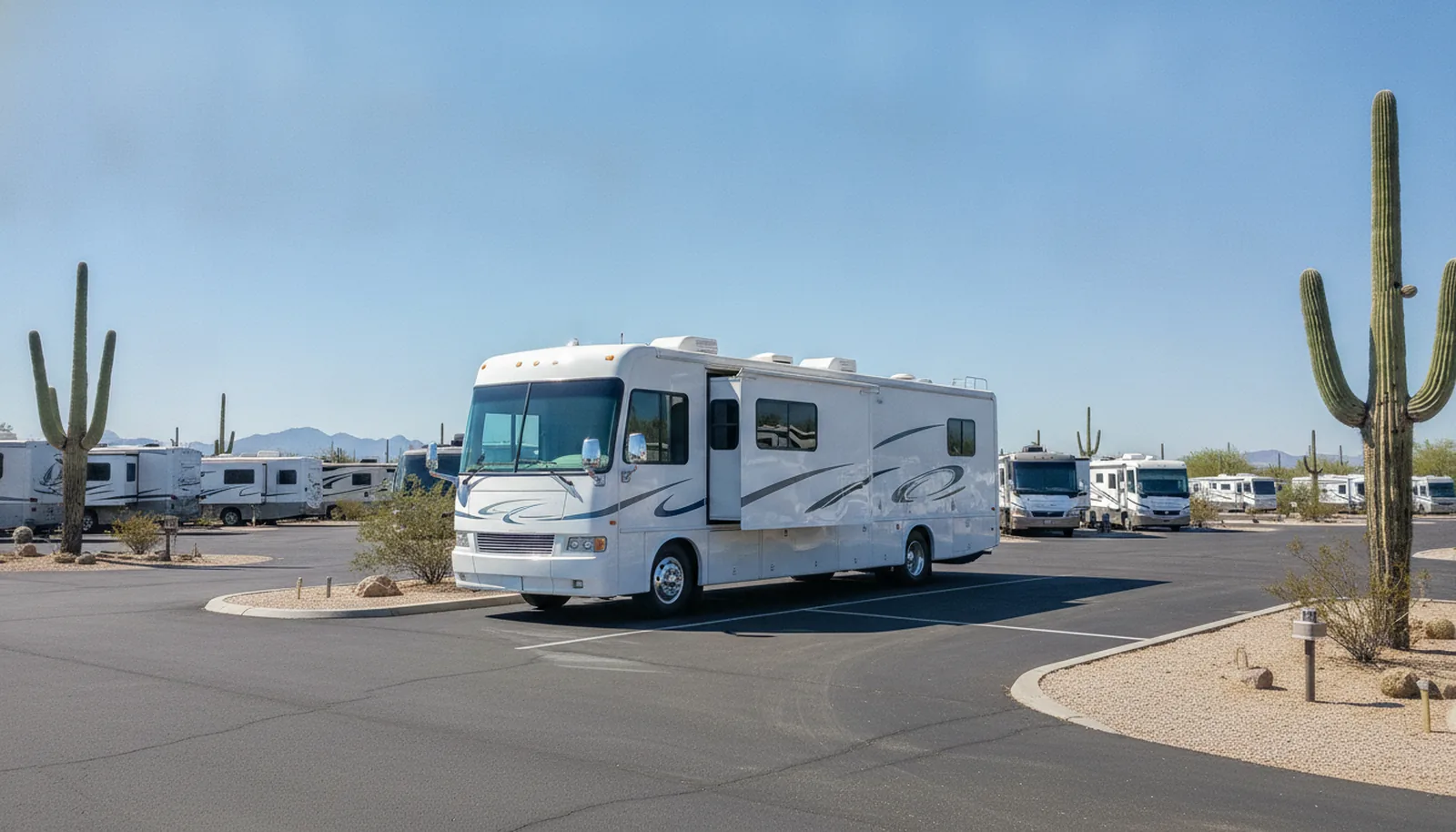
Last October at Lost Dutchman State Park, a couple two sites down had their slide stuck halfway out on a Sunday morning, and the wife was scrolling RV dealers in Tucson on her phone, because that’s where they’d bought it. The motor was dead, and without a manual crank and three of us wrestling the thing back in, they weren’t going anywhere. I walked back to my 2018 Class C, pulled the paperwork out of the glove box, and ran the numbers on what that Sunday would cost them without a contract: a new slide motor, labor, maybe a service call if nobody on site could help. That invoice is exactly what the finance office is betting you’re afraid of when they price an RV extended warranty cost into your monthly payment.
I spent nine years in that office, using the same tone as offering dessert at a diner, every time. Before you sign anything at RV dealers in Tucson, know what these contracts actually cover, what moves the price, and when they earn their keep.
What is an RV extended warranty, really?
You are buying an extended service contract, not a warranty and not insurance. A separate legal agreement, usually backed by a third-party administrator, that pays for covered repairs after you pay a deductible. The manufacturor’s warranty covers most rigs for the first year or so. After that, your on your own unless you bought one of these.
I sold them for years. Never once called a contract a warranty in front of a custumer. That word makes people think they’re getting something from the factory, and they aren’t.
What drives the RV extended warranty cost?
Most contracts I quoted ran from about $1,500 on a small towable up to $7,000 or more on a big motorhome with a long term. That’s a real range, not a sales pitch. Five things move the price: rig type and value, age, term length, coverage level, and deductible. A 40-foot diesel pusher costs more to cover than a 20-foot travel trailer because the parts and labor run higher. Age matters because older rigs break more, and the administrators know it. They have the claims data.
The deductible works like an insurance deductible. Lower it is, higher the contract price goes.
Exclusionary vs stated-component coverage
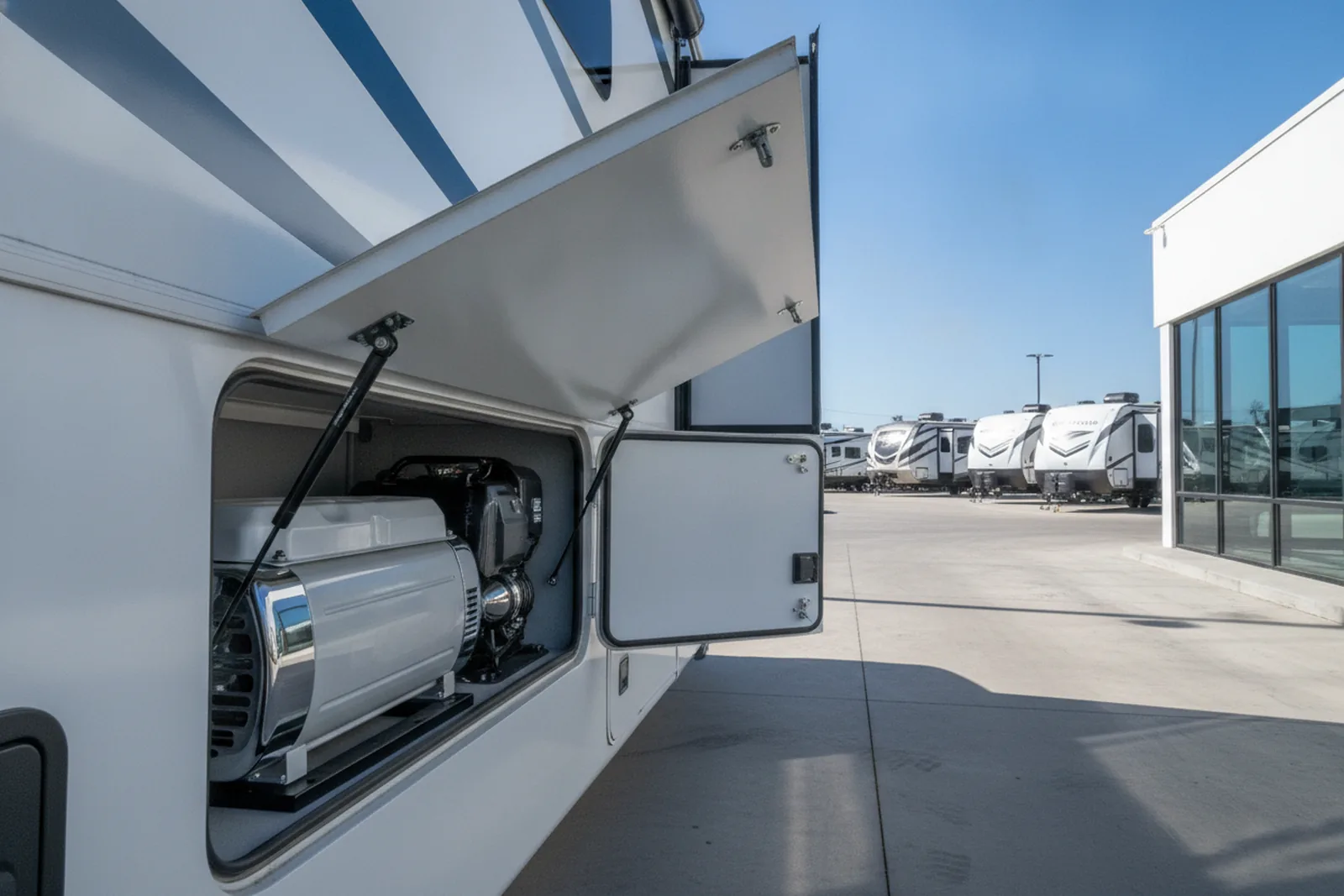
Exclusionary coverage is the broadest: everything is covered except a list of exclusions, which usually includes seals, sealant, cosmetic items, wear parts, and any damage from lack of maintenance. Stated-component coverage only pays for listed parts, like the engine, transmission, water heater, or slide mechanism. That second one is cheaper for a reason.
I had a full-timer couple whose slide motor claim went thru with exclusionary coverage. No fight, no drama. The motor failed, the adjuster approved it, the shop replaced it.
Then there was the weekender who brought me paperwork for a roof leak that stained the ceiling. He’d owned the rig for two years, never resealed the roof, and the contract was clear. Denied. That’s the other kind of story, and it’s the one that leaves people mad at the finance office.
If you want to know what salespeople won’t tell you, this video from an RV tech is worth watching before you sign.
Deductibles, claims, and the fine print
Before you buy, answer four questions from the contract itself.
There’s the exclusions list. What’s the filing window when something breaks? Is there a maximum payout per claim or for the life of the contract? Can the administrator send used or rebuilt parts, or do they have to use new OEM parts? If any answer surprises you, don’t sign that day.
I always told customers to keep a binder with oil change receipts, roof inspection notes, and pictures of every repair. No maintenance records, no claim. The administrator isn’t going to get your word that you kept up with it.
The cancellation clause matters too. Most contracts can be cancelled for a prorated refund minus a fee, but the window and the math vary. I had a customer cancel a $5,500 contract after 14 months and get back $4,200. Better than he expected. Check the contract for the cancellation terms, and don’t listen to the person in the finance office if they say you cant cancel. The contract is the boss.
Should you roll it into the loan?
You can, but you’ll pay interest on the contract for the life of the loan. Say the contract is $3,000 and you roll it into a $60,000 loan. At an assumed 8% APR over 15 years, that contract alone costs you roughly $2,200 in interest. That’s real money. I saw people roll everything into the loan because the payment only went up about $30 a month. They never did that math once.
The financing talk is a seperate negotiation. I’ve written before about how a credit union pre-approval can beat the dealer’s finance office, and that applies here too. Get the loan numbers straight first. Then you can look at the service contract as a standalone purchase, not a line item buried in the payment.
Quick test: Is an RV extended warranty worth it for you?
Score 3 or higher and a contract with a low deductible and exclusionary coverage may make sense. Score 0-2 and you should put the contract price into a repair fund and let it grow. Answer these five questions honestly.
| Question | Yes | No |
|---|---|---|
| Can you cover a $3,000 repair without touching savings or a credit card? | +0 | +1 |
| Does your rig have slides, leveling jacks, or a generator (more to break)? | +1 | +0 |
| Do you travel far from home where breakdowns cost more? | +1 | +0 |
| Do you keep records of every oil change and roof inspection? | +1 | +0 |
| Would a major failure end your trip and leave you stranded? | +1 | +0 |
That’s my rule of thumb. I’ve seen it save people from paying for coverage they’ll never use.
The math on a repair fund is simple. A $4,000 contract with a $100 deductible means a repair has to exceed $4,100 before you break even. Plenty of owners I knew had a few medium repairs over five years and never one big enough to cross that line. But when the slide motor dies in the middle of nowhere, you’ll want the contract if you didn’t save the cash.
Can you buy it later, and can you cancel?
Yes to both, usually. You don’t have to buy a service contract the same day you buy the RV. Many administrators will sell one later, as long as the rig is under a certain age or mileage limit. Take the rig home, do your own inspection, decide after the first few trips.
I’ve seen people buy a used motorhome from a dealer and then shop around for a contract on their own. Smart move. Dealer prices are typically marked up, sometimes by a lot. Compare offers from at least two administrators and read the contract language side by side. The same coverage, the same administrator, two different prices. It happens all the time.
Cancellation usually gets you a prorated refund minus an admin fee, though some contracts subtract claims already paid. And if you financed the contract, the refund usually goes to the lender and reduces your balance, not your cash. Read the cancellation clause twice before you sign. Ask the finance manager to point to it and show you where it is.
What I’d tell a friend standing in the finance office
Take the contract brochure home. Put it on the kitchen table and read the exclusions list out loud. If any sentance makes you say ‘wait, that’s not covered?’, don’t buy it that day. The finance office is designed to close you before you leave, and there’s no rush. Zero rush.
Do the repair fund math before signing anything. A contract is a bet against your own luck, and the house sets the odds. The administrator has actuaries and decades of claims data. You have a brochure.
This weekend, pull up RV dealers in Las Vegas and ask two of them for an itemized out-the-door quote on a contract for a similar rig. Then get a direct quote on the same coverage from an administrator and lay them side by side. If the spread is more than $500, negotiate or walk.
Related reading
FAQ
What does an RV extended warranty cost?
Most contracts run from about $1,500 on a small travel trailer up to $7,000 or more on a large motorhome with a long term. Price depends on rig type, age, term length, coverage level, and deductible. Dealer prices are negotiable, so get at least two written quotes before buying.
Is an RV extended warranty the same as insurance?
No. An extended warranty is a service contract, not insurance. It pays for covered mechanical repairs after a deductible. Insurance covers damage from accidents, weather, or theft. A service contract does not cover collision or comprehensive damage, and insurance does not cover mechanical breakdown.
Can I buy an RV extended warranty after I buy the RV?
Usually yes. Many administrators sell contracts after the purchase as long as the rig is under a certain age or mileage limit. You don't have to buy at the dealer. Shopping later gives you time to read the fine print and compare prices without dealer pressure.
Can I cancel an RV extended warranty and get my money back?
Most contracts have a cancellation clause with a prorated refund minus an admin fee, and some subtract claims already paid. If you financed the contract, the refund usually goes to the lender and reduces your loan balance. Read the cancellation terms before signing and keep a copy of the contract.
What does an RV extended warranty not cover?
Typical exclusions include seals, sealant, roof membrane, cosmetic items, wear parts like brake pads and tires, pre-existing conditions, and damage from lack of maintenance. Read the exclusions list carefully. A leak from a dried-out roof seal is is usually not covered, even if the water damage inside is extensive.
Are RV extended warranties negotiable?
Yes. Dealer prices are typically marked up and there's usually room to move. Ask for a discount, just like on the RV itself. Compare the dealer's price to direct quotes from administrators or brokers on the same coverage, term and deductible.
Find RV dealers near you
Compare new and used RV dealerships in your city, then ask a few what they have in stock.
Browse by stateOr jump to: Fort Worth, TX · Lake Havasu City, AZ · Longmont, CO