How long can you finance an RV? What the longest term really costs
By Denise Kowalski · October 21, 2026
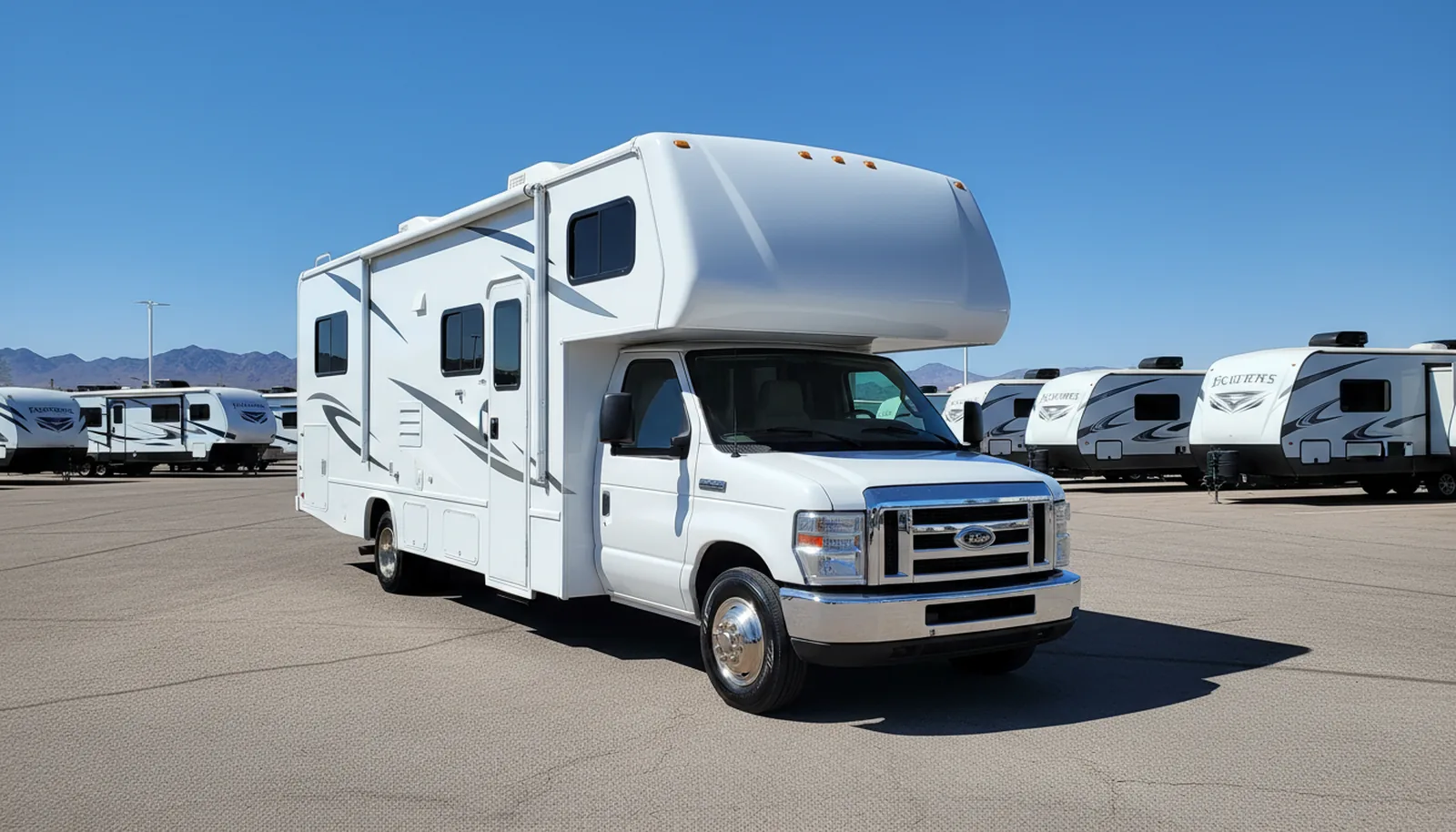
Last October I sat in my Class C at the Pima County Fairgrounds with a storm rolling in off the Catalinas, doing 20-year loan math on the back of a propane receipt. The payment looked friendly. (I’d been walking the motorhome dealers in Mesa lots again, out of pure habit.) The total interest looked like a second engine. Nine years in F&I at Phoenix RV dealerships, so I’d signed enough of those contracts to know what they do to a buyer over time. Everyone asks how long can you finance an RV. The real question is wether the longest term you can get is a payment solution or a slow leak. I took a 12-year loan on my 28-foot Class C, paid extra every month, and still owed more than the trade value for the first six years.
How long can you finance an RV?
Typical RV loan terms start at a few years and run up to 15. Some lenders stretch to 20 on big loans for newer motorhomes. What you’ll actualy get depends on the loan amount, the age of the unit, new or used, and your credit file.
Lenders shortens terms as the RV gets older. Some won’t touch a unit past a certain age, and the ones that do often cap the term well short of what they’d give you on a new one. The cutoffs vary by lender.
There’s no industry-wide standard for the maximum term. Comparing offers from motorhome dealers nationwide? Have them quote the same maturity so you’re not putting a 10-year loan next to a 15-year loan and looking only at the payment.
What a longer term actually does to your loan
A longer term lowers the monthly payment and raises the total interest paid. Here’s a $60,000 loan at an assumed 8 percent APR. That’s an example rate for the math, not a quote.
| Term | Monthly payment | Total interest | Balance owed after 5 years |
|---|---|---|---|
| 10 years | about $728 | about $27,400 | about $35,900 |
| 15 years | about $573 | about $43,200 | about $47,300 |
| 20 years | about $502 | about $60,400 | about $52,500 |
The 20-year loan saves about $226 a month but costs about $33,000 more in interest, and five years later you still owe most of the original balance. The right answer when someone asks your budget is a price, not a payment. Decide what the RV is worth to you, negotiate that number, then talk term. Otherwise the term gets used as a discount tool, and the discount comes out of your pocket as interest.
I found this video that breaks down the real cost of RV loans in plain numbers.
Down payment and negative equity: the long-term trap
RV lenders commonly want 10 to 20 percent down. Some programs take less with good credit, and some specialty lenders want more on older units.
RVs depreciate fast in the first few years, and that matters when you want to trade. Negative equity isnt hard to roll into the next loan, but it becomes a hidden price increase on the next rig. I’ve watched buyers trade a travel trailer with $8,000 of negative equity and spread that loss over another 15 years. The loan looks cheaper every month and more expensive every year. A deeper look at how fast rigs lose value is in RV depreciation: how fast rigs lose value and how I’ve limited the damage.
The prepayment question nobody asks in the finance office
Most RV loans allow extra payments without a penalty, but ‘most’ isn’t ‘all’.
If there’s no penalty, my play is the shortest term I can carry comfortably, then an extra $100 or $200 in the good months.
That’s what I did. I bought the 12-year loan becuase it was the longest my credit union offered on my 28-foot gas coach, then added extra payments in months when I wasn’t paying a campground invoice. Read the contract and check your lender’s rules before assuming extra money goes straight to principal. Some lenders hold payments as future installments unless you tell them otherwise.
Credit unions vs. dealer finance: where the longest terms live
Dealerships have a network of lenders, and sometimes they can get terms you won’t find at a credit union.
A credit union pre-approval is a good anchor. In my experience the very longest terms on big motorhomes usually came from specialty RV lenders, but credit unions surprised me plenty. Ask both. A detailed comparison of the two routes is in RV financing: credit union pre-approval vs the dealer’s finance office.
Ask the finance manager what buy rate the lender approved. You don’t have to be rude. Just say you’ll get a quote elsewhere and circle back. A better rate usually shows up about then.
Can you deduct RV loan interest?
Maybe, but don’t let that drive your term decision.
Most people don’t itemize anymore, and the deduction has rules and limits, this is a tax question, not a finance question, and the answer changes with your return. Never let a dealer hint that the interest deduction makes the loan cheaper. A pitch built on tax savings is usually wrong.
Want to know if your RV qualifies? Bring the spec sheet and your loan documents to a tax professional. What the lender says about sleep, cook and toilet facilities doesn’t matter as much as what the IRS agent hears on audit day, and that’s a different kind of long-term risk.
How I chose a term for my Class C, and what I’d do differently
When I bought my 2018 Class C, the credit union offered terms from 3 to 12 years. Looking back, I’d probably take a 10-year loan instead. The rate was lower, and the mental pressure of a bigger payment would have kept me honest about extras.
What I wouldn’t change: I put 20 percent down, bought after the model year changeover when the dealer wanted the floor plan gone, and refused every add-on in the F&I office except a transferable road hazard policy on the tires. The finance manager tried to stretch the term to 15 years to make the payment look smaller, but I stuck with 12. I wrote the term on the top of the buyer’s order and circled it.
Your number will be different. The test that matters is what you’d still owe at the point you’re most likely to sell. A lot of people trade sooner than they planned, so run a 5-year balance on any term you’re quoted. If that number makes you wince, the term is too long, and the next test tells you fast.
The Saturday morning test
Before you sign anything, call two or three dealers or lenders and ask for the same loan amount, same down payment, and terms of 10, 12, 15 and 20 years where they’re availible. Write the monthly payment and the total interest for each term on the same page. Circle what you’d still owe after five years.
If the 20-year payment looks like the only one you can afford, you’re financing a lifestyle you can’t pay for yet. That’s not a judgement. It’s math. The easiest way to avoid the long-term trap is to buy less RV, put more down, or wait a year and buy used.
This weekend, pull up motorhome dealers in Mesa or wherever you live, ask two of them for a written out-the-door quote on the same unit, and bring that term sheet to your credit union before you step into the finance office. The numbers won’t lie to you, but a salesperson with a payment chart might.
Keep reading
FAQ
How long can you finance an RV?
Common RV loan terms run from a few years up to 15 years, and some lenders go to 20 years for large loans on newer motorhomes. Smaller loans and older units get shorter maximum terms. The limit depends on the lender, the loan amount, the RV's age, and your credit. Get pre-approved to see actual terms for your situation.
What is a good down payment for an RV loan?
Lenders commonly ask for 10 to 20 percent down, but requirements vary by credit and unit. More down means lower monthly payments, less interest and longer before you're upside down. If you can put 20 percent down and still sleep at night, that's usually safer than stretching the term to lower the payment.
Can you get a 20-year RV loan on a used travel trailer?
Rarely. Long terms like 20 years are usually reserved for large loan amounts, often high five figures or more, on newer units. A used travel trailer with a smaller loan amount won't qualify for a 20-year term at most lenders. Expect noticeably shorter terms on older units, if the lender finances them at all.
Is RV loan interest tax deductible?
Maybe. The IRS may allow the mortgage interest deduction for a qualified home with sleeping, cooking and toilet facilities, which can include an RV used as a main or second home. But you have to itemize and meet IRS limits, and lots of people don't itemize, so don't count on it. Ask a tax professional before relying on it.
Can I pay off my RV loan early without a penalty?
Many RV loans allow early payoff without penalty, but some contracts include a prepayment penalty or fee if the loan is paid within a set period. Read the loan contract's prepayment clause and ask the finance manager to point to it. If there's no penalty, extra payments can save you thousands in interest.
Why am I upside down on my RV loan?
RVs depreciate quickley, especially in the first few years. If you put little money down and finance for a long term, the loan balance drops slower than the market value falls, leaving you owing more than the RV is worth. This negative equity is common in the early years and becomes a problem when you want to trade or sell.
Should I get an RV loan from a dealer or a credit union?
Get a quote from both. A credit union pre-approval gives you a baseline APR and term. Dealer finance can sometimes offer longer terms or better rates for your situation, but the dealer may mark up the rate it receives from the lender. Compare the same term and APR side by side, and ask the dealer what buy rate the lender approved.
Find RV dealers near you
Compare new and used RV dealerships in your city, then ask a few what they have in stock.
Browse by stateOr jump to: Fort Myers, FL · Eugene, OR · San Diego, CA