New vs used RV: what I learned buying both
By Corinne Batey · October 21, 2026
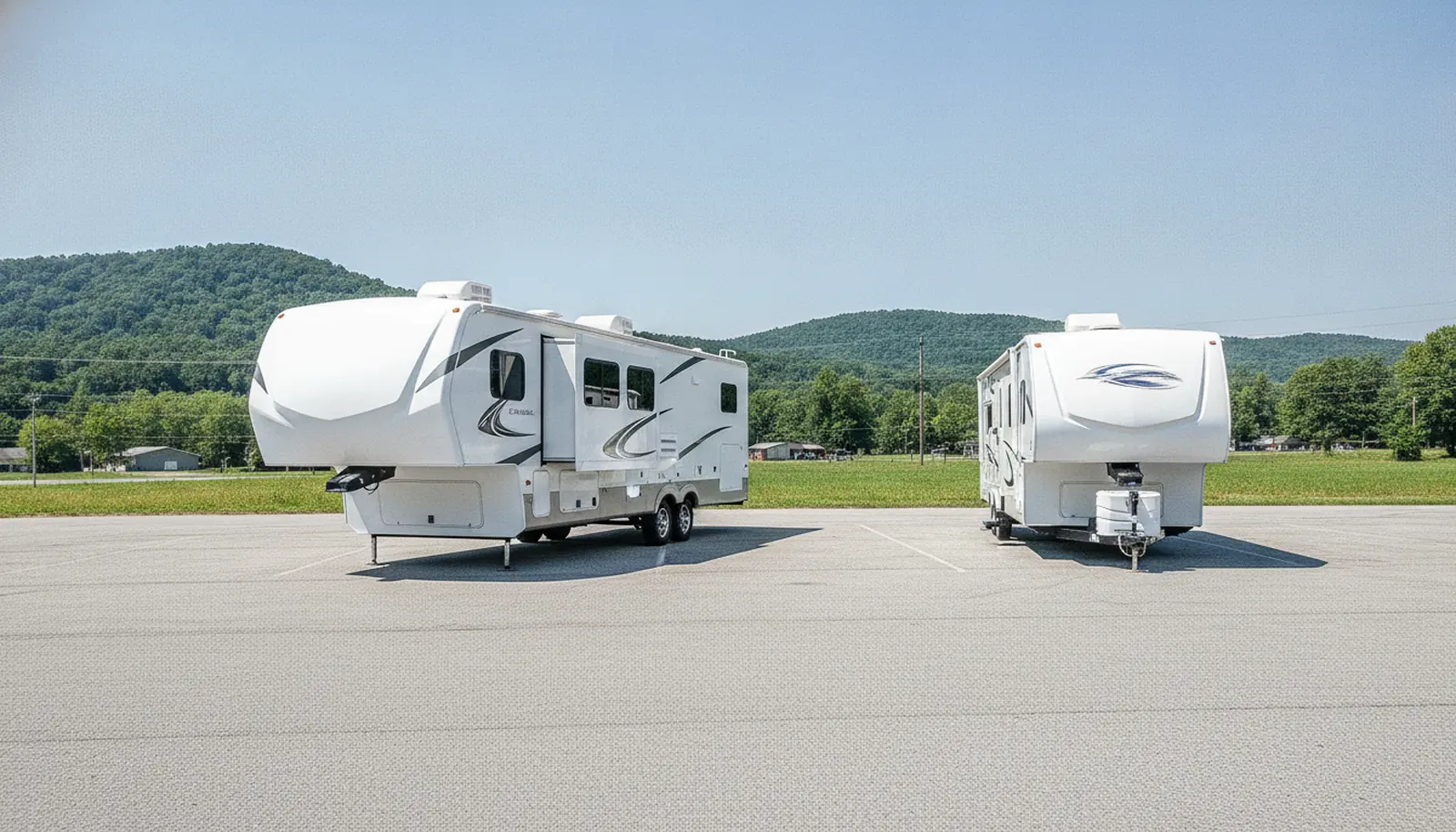
The morning I picked up my brand-new fifth wheel it was 34 degrees in Boise and the dealer’s lot had a dusting of snow. The walk-through took four hours because the furnace wouldn’t light. The service tech pulled the thermostat out three times before the gas valve finally clicked, and I stood there in my coat watching my breath in the kitchen. (Last week I was scrolling RV dealers in Nashville for a friend who’s stuck on this exact choice.) I’d bought three used rigs before that one, but the new one taught me: a warranty doesn’t stop the punch list, it just moves the waiting room closer to home. Since then I’ve made peace with the new vs used question through my own checkbook, and I can tell you what no dealer puts in a brochure. If you’re shopping the same choice, RV dealers in Nashville will show you both sides of the lot, but these numbers come from my own paperwork, not a sales pitch.
What “new vs used RV” really means when you sign
It comes down to who eats the first five years of depreciation and who gets to call the factory when the slide motor dies in Wyoming. A new RV is an untitled unit from the current or previous model year, sold with the manufacturor’s warranty and a sticker price that most buyers negotiate down from. A used RV is anything with a title allready in someone else’s name, sold as-is or with whatever warranty the dealer throws in.
When you buy new, your paying for the privilege of working through the factory’s first-year defects. When you buy used, you’re paying less up front but betting that the previous owner fixed the leaks before they rotted the floor.
Depreciation: the steepest drop is the one you don’t see
Depreciation is why a two-year-old RV can cost noticeably less than the identical new one on the next pad. The first year is brutal. A new unit can lose twenty percent or more in the first year, and after five years it’s often worth roughly half what the original buyer paid, though actual loss varies widely.
My current fifth wheel stickered at $94,000 in 2021. I paid $78,000 out the door, and two years later a dealer offered me $64,000 on trade. That’s a $14,000 haircut for two seasons of use, and my rig was clean. If you want the math without my story, our post on RV depreciation breaks down the curve by type and year.
What helps resale later: a floor plan people actually want (rear living, not a front kitchen nobody asked for), a roof that’s been re-sealed every fall, and a clean title with no salvage or flood brand. Which is where the warranty question gets sharp, because the first owner’s fixes are the only thing standing between you and that depreciation curve.
Warranty and first-year fixes: what the factory won’t tell you
A new RV warranty is basically a promise that when the first-year stuff breaks, the covered parts get fixed without a bill. Mostly. After you wait for a service bay.
A used RV might have a few months of factory warranty left, or none at all. The appliances (fridge, furnace, AC) often carry their own warranties that may transfer if you file the paperwork within the maker’s deadline. When I sold my Class C, the buyer called me two weeks later becuase the dealer hadn’t mentioned the transfer form for the microwave. It was still in the glovebox.
My advice: if you buy new, plan a shakedown trip within the first two weeks and film every defect for the punch list. If you buy used, pay a mobile tech to give it a once-over before the first long trip.
The real cost table: new, nearly new, and older used
The price on the contract is never the price you live with, and I’ve bought all three kinds.
| New | Nearly new (2 to 5 years) | Older used (6+ years) | |
|---|---|---|---|
| Typical price vs MSRP | Varies widely; often a substantial discount off sticker | Often noticeably below the new price | Often well below the new price, depending on condition |
| First-year depreciation hit | You take it | Mostly done | Done, but condition risk rises |
| Factory warranty | 12 months main, often longer structural | Sometimes remaining, sometimes transferable | Rarely any |
| Biggest risk | Defects and shop wait times | Hidden water damage from the first owner | Deferred maintenance and old tires |
| Financing | Usually the best rates and longest terms | Good terms, often a bit shorter than new | Many lenders cap terms or won’t loan at all |
| Best for | Full-timers who want the exact floor plan | Buyers who want value without project weekends | Budget buyers and handy owners |
The nearly new column is my favorite, and not because I’m cheap. I looked at a used fifth wheel in Knoxville last spring at one of the used RV dealers in Knoxville and the previous owner had left a notebook full of repair dates, torque specs, and a hand-drawn wiring diagram for the solar. That notebook told me more about the rig than the salesman did. Which is the exception, because most used RVs hide their history in the walls, not in a notebook.
The used RV condition trap: water is the enemy
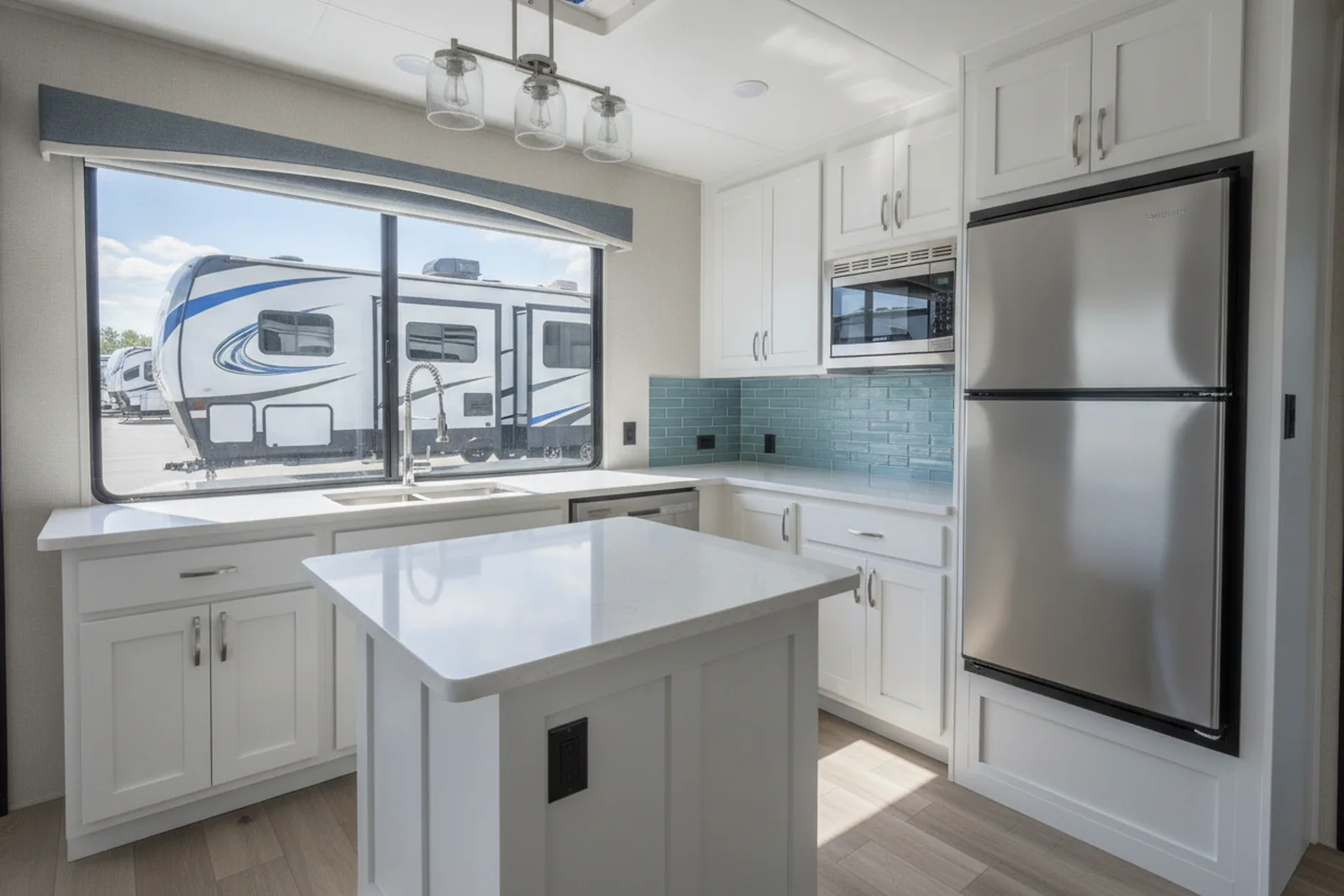
Every used RV I’ve bought has had a hidden issue, and every one of them was water.
What they can’t hide is a water stain that bleeds thru paint, a floor that flexes when you stand on the toilet bolts, or a rusty screw in the slide track. Bring a little flashlight and a folding step stool. And if you’re shopping alone, our what-to-look-for-when-buying-a-used-RV checklist walks the same path I do now: roof first, then walls, then floor, then every seam with a moisture meter.
One trick that’s saved me twice: open the outside storage bays and sniff for the smell of dried leaves or damp cardboard. Water pools in the low corners and takes weeks to dry, and nobody details inside the pass-through.
I found this video from RVgeeks helpful when I was comparing new vs used, it covers the pros and cons better than most dealers will.
Financing and insurance: older used RVs get shorter leashes
Lenders get pickier as an RV ages, and some stop lending past a certain model year. The cutoffs vary by lender.
I learned this the hard way with my third rig. The finance manager slid a rate across the desk that was two points higher then my credit union, but I took it because the payment was $80 a month less. Longer term, lower payment, more interest. Don’t do that. Get a pre-approval from your bank before you hit the lot, then let the dealer try to beat it with the same term and down payment. The credit union pre-approval letter in my glovebox has ended more than one high-pressure finance office conversation before it started. And ask your insurer how a total loss gets paid before you sign. Some policies offer agreed value or replacement options on newer units, others pay actual cash value, which can be a lot less than what you paid. Check your policy.
The walk-through: a new RV is not a finished product
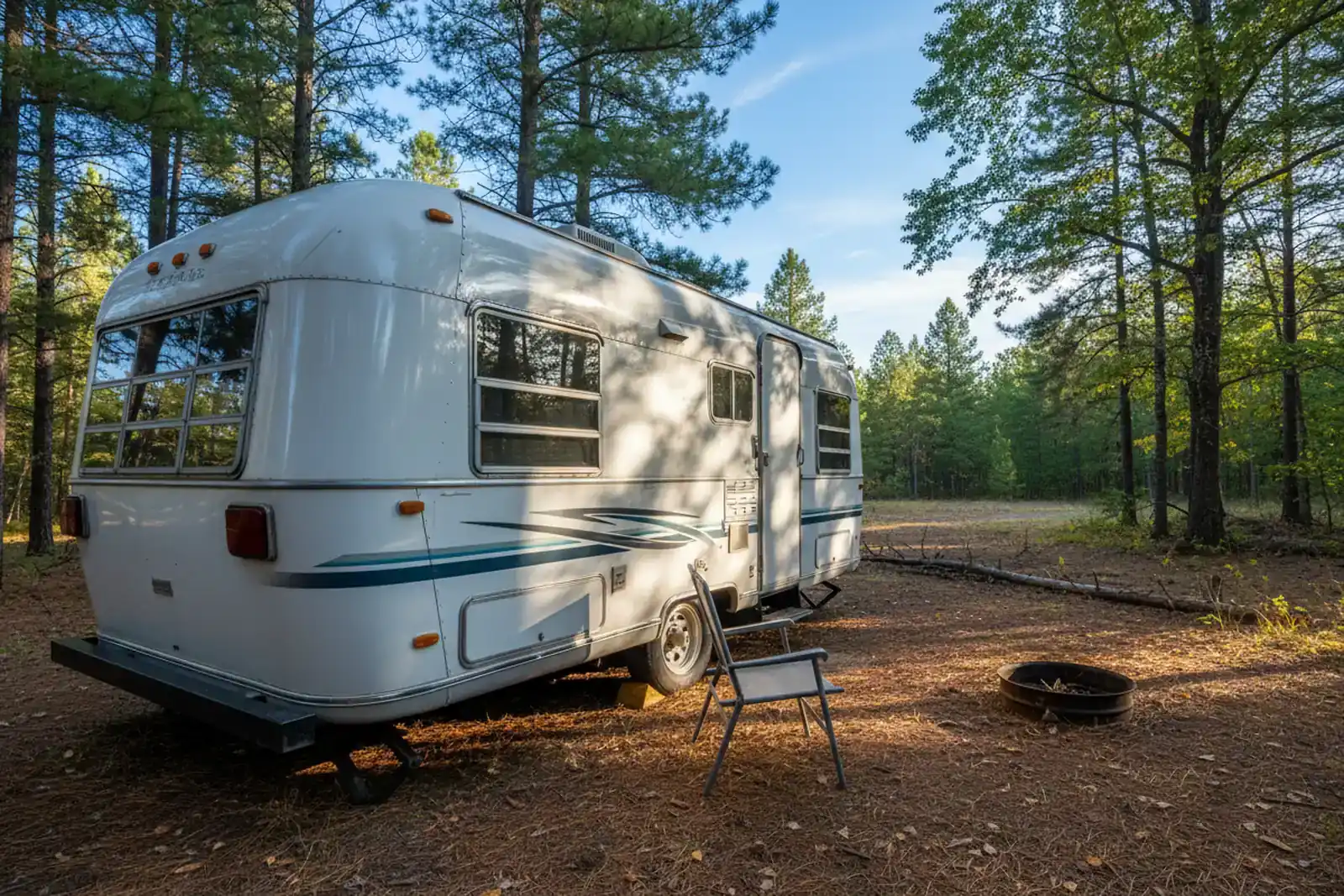
New RVs can roll off the truck with loose screws, a fitting that was never snugged down, and sealant that skipped a corner.
So when they hand you the keys, take over the inspection. Run every system with shore power and propane connected. Put water in the tanks and watch the pump cycle. Run the slides in and out three times. Start the generator and let it run until it’s hot. If it’s winter, ask them to de-winterize it first so you can test the water heater and the toilet.
It took me four RVs to realize the walk-through is not a tutorial. It’s your last chance to make the dealer fix it for free before it becomes your problem. Treat it like a job interview, not a tour.
The bathroom-door test I use before every RV purchase
I won’t buy a rig if I can’t sit on the toilet with the bathroom door closed. That’s my personal test, and it’s more useful than half the spec sheets. You should find your own version of that. Maybe it’s checking whether you can reach the microwave without a step stool. Maybe it’s whether the bed has a window you can open from lying down.
Then pull up three dealers near you, ask each for a written out-the-door quote on the same unit, and compare the bottom line, not the payment. The one with the lowest price isn’t always the best deal, but the one that skips the details is never the honest one.
More from the lot
FAQ
Is it better to buy a new or used RV?
It depends on your budget, how handy you are and how much you care about an exact floor plan. In the new vs used RV choice, new gets you a factory warranty and the latest layout but takes the steepest depreciation. Used costs less and skips that drop, but hidden water damage is the big risk, so get it inspected.
How much value does a new RV lose in the first year?
A commonly repeated ballpark is around 20 percent or more in the first year, and roughly half after about five years. Those are rough figures, not data. The real loss swings a lot by type, brand, floor plan, condition and the market. Check a value guide and comparable listings for the exact rig.
Do new RVs have a lot of problems?
First-season defects are common on new units, things like leaks at fittings, trim, slides and appliances that need adjusting. They're usually covered by the manufacturer's warranty, but the fix often means waiting on a dealer service department, which can be booked for weeks in busy season. A slow, thorough walk-through catches a lot of it.
Does the warranty transfer when you buy a used RV?
Sometimes. Some manufacturers let remaining coverage pass to a second owner and some don't, and appliances often have their own warranties with their own rules. Ask the dealer for the warranty booklets, check the in-service date, and find out if any transfer form or fee is needed before you sign.
Can I get a loan on an older used RV?
Often, but terms get shorter as the RV gets older, and some lenders won't finance units past a certain age at all. Rates can also be higher on used. Get a pre-approval from a credit union or bank before you shop so you know what term and APR you qualify for on the year you want.
What age of used RV is the best value?
A lot of buyers aim for something a few years old, because the first owner already absorbed the steepest depreciation and the early bugs are often fixed. That's an opinion, not a rule. Condition matters more than age, so a well-kept older rig with records can beat a neglected two-year-old one.
Find RV dealers near you
Compare new and used RV dealerships in your city, then ask a few what they have in stock.
Browse by stateOr jump to: Used RV dealers · Anchorage, AK · Reno, NV · Grand Junction, CO