What to look for when buying a used RV on a dealer lot (my checklist)
By Corinne Batey · October 21, 2026
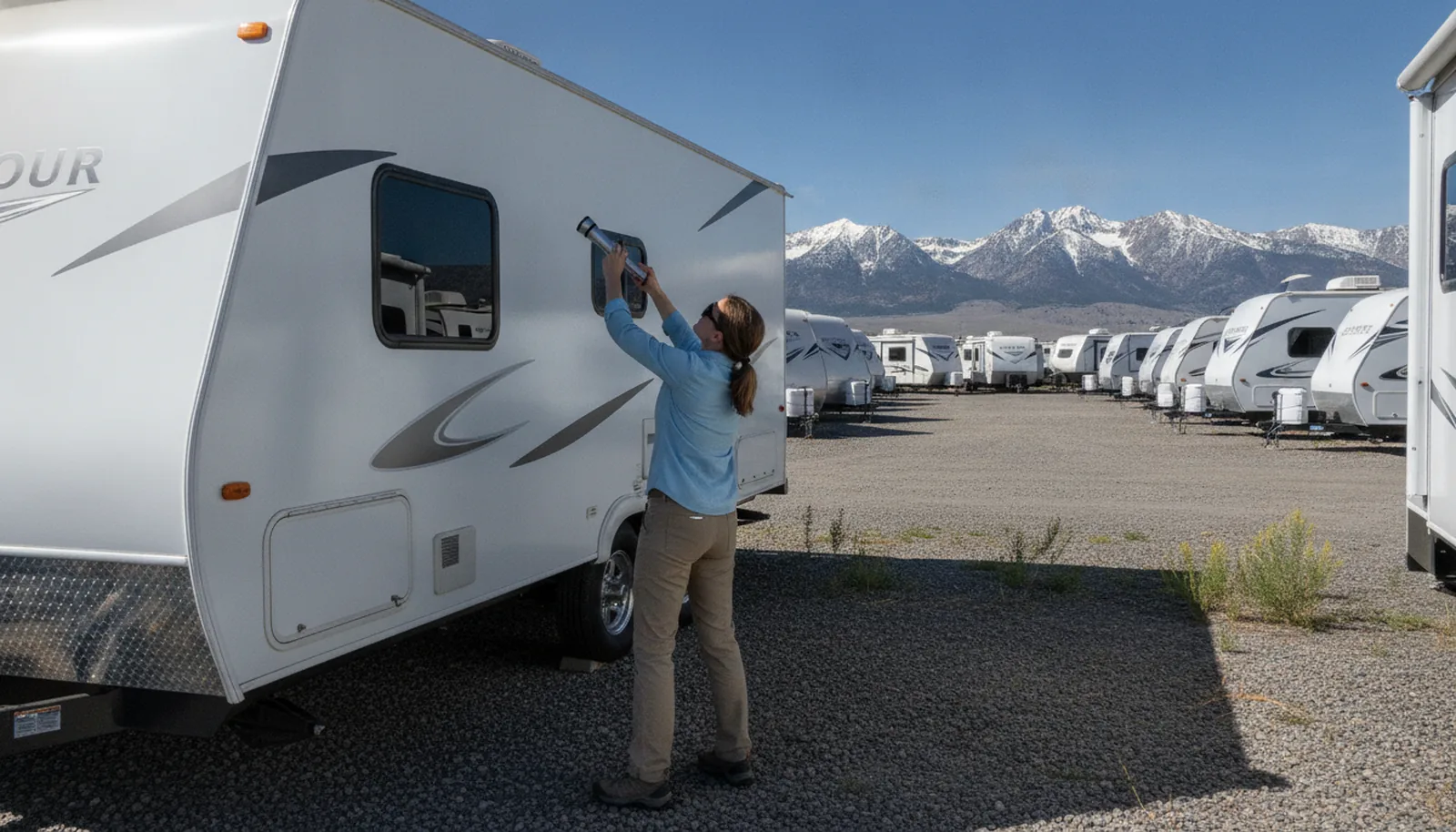
Last March I stood on a dealer lot in Mountain Home, Idaho, wiggling the bathroom door of a used fifth wheel while the wind off the Snake River snapped the awning like a flag. I was there to figure out what to look for when buying a used RV, and the floor under my boot had that familiar give, the kind I’d felt once in a soggy trailer. It bent maybe a quarter inch. Right then I knew that unit would cost somebody five thousand dollars more than the sticker said.
When you shop used RV dealers in Boise, the paint and the price aren’t the real question. It’s where the water got in. I’ve bought four rigs now and every used RV on a lot is hiding one of two things. Either it needs a cheap fix or a full gut job. You have to know which is which befor you sign.
What to look for when buying a used RV: start with water damage
Water damage is the one deal-breaker that hides from you, and the first place to find it is under your feet.
Start with the entry steps. Look up at the ceiling around every vent, every skylight, the air conditioner. Brown rings are old leaks. Open every cabinet and closet and check the corners, becuase water runs down and wicks up.
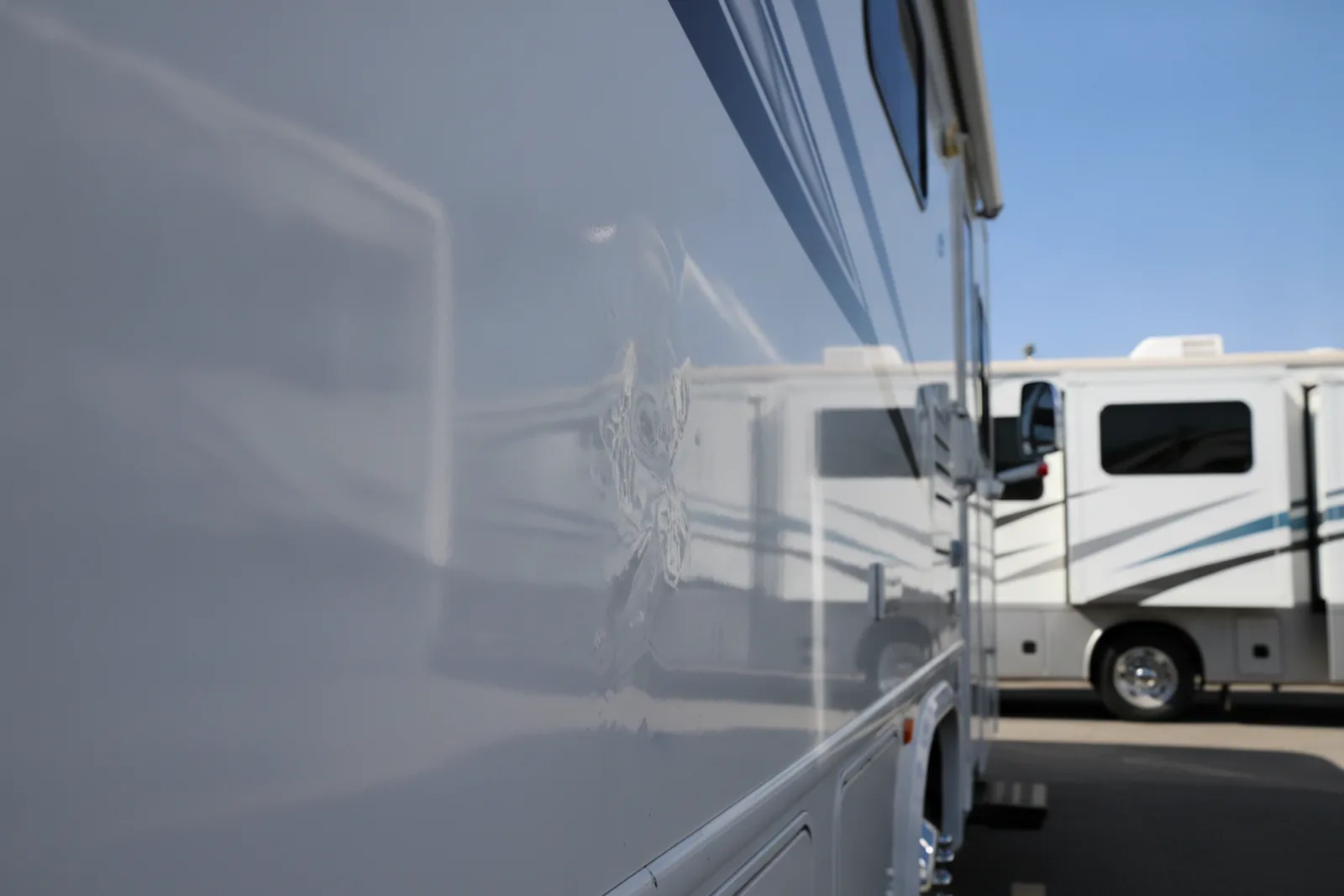
Then go outside and sight down the sidewalls at a low angle. Bubbles or waves in the fiberglass are delamination, which means water got between the skin and the frame. A moisture meter helps but your nose works for free. If it smells like a wet gym bag, walk away.
Roof and sealant: the part most buyers skip
The roof ages faster then anything else on an RV and it’s the most expensive thing to ignore. I climbed up on a used Class C at a lot in Salt Lake City once and the sealant was cracked into a hundred little alligator squares.
Walk the roof edge and look at every seam, around the vents, the AC gasket, the plumbing pipes.
A roof reseal costs a few hundred dollars if you do it yourself, over a thousand at a shop. A full membrane replacement can run well into the thousands. The sealant is the first clue which one you’re buying.
Tires: read the date code, not just the tread
RV tires age out before they wear out, and the date code tells you when your “new” tires are already dead.
Read the four-digit DOT code on the sidewall. Seven years is my personal cutoff, no matter how good the tire looks. Cracks in the sidewalls and between the treads mean dry rot.
Towables sit for months at a time, which flat-spots and weakens tires. If the dealer tells you the tires are ‘like new,’ read the date code anyway. On a trailer that can mean four or six new tires, a few hundred bucks apiece, before you leave the lot.
Test every system twice: shore power and propane
A used RV can pass a quick walkthrough and fail the first night, so test it like you’re already living in it.
Hook up shore power and propane and run these, in this order:
- AC: let it run 15 minutes. Cold air at every vent?
- Furnace: on propane, hot air out of every register?
- Water heater: on gas, then on electric (only with the tank full).
- Fridge: on gas, then electric. It takes hours to get cold, so just make sure it starts cooling.
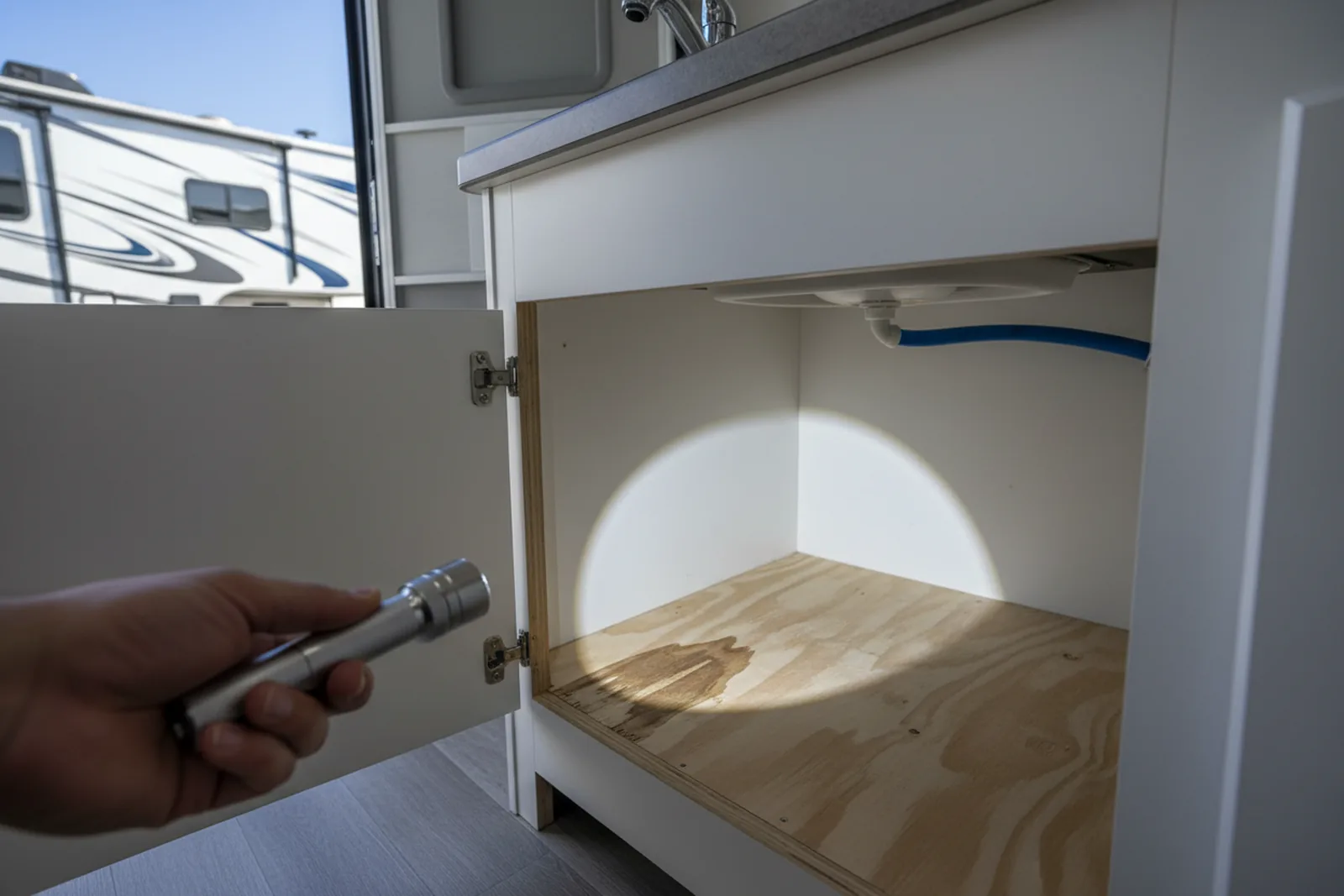
- Water pump: run the sink until it kicks on, check the pressure, then look under every cabinet for drips.
- Slides: push them out, push them in, listen for grinding.
- Awning: all the way out and back in.
- Leveling jacks: raise and lower.
- Generator: start it, put a load on it, note the hours. Over 500 hours isn’t a deal-breaker but it affects the price.
Safety check: after lighting the fridge and water heater, sniff around the propane connections. Rotten-egg smell means shut the tank valve and get a tech. Leak checks are soapy water on the fittings, never a flame. Check the smoke, CO, and LP detector dates too. They have an expiry date on them and an out-of-date one gets replaced.
Motorhomes: the chassis is a separate inspection
If you’re buying a Class A, B, or C, you’re buying two things bolted together: a house and a truck, and the truck half can cost more than the house half to fix.
Ask for the chassis maintenance records.
I almost bought a used Class C in Salt Lake City in the rain. The bunk over the cab had a a soft spot I didn’t notice until I opened the cabinet and saw water stains. The dealer had a clean title, but titles don’t tell you abotu the leak the previous owner fixed with a tarp.
If you’re not a mechanic, pay an independent RV inspector to go over the chassis. For the house systems, my RV PDI checklist covers what I test before signing.
I found a helpful walkthrough video that shows the inspection steps in action, and it caught a few things I missed on my first look.
My printable used RV inspection checklist
This is the one I keep in the truck, and it has caught more problems than any dealer walkthrough.
Water damage
- Press the floor at the door, bathroom, toilet and under the fridge. Any give?
- Ceiling around vents, skylights and the AC. Brown rings?
- Sight down the sidewalls at a low angle. Delamination?
- Open every cabinet. Look at corners. Sniff for must.
- Moisture meter on the walls and floor near the corners, if you have one.
Roof and sealant 6. From a ladder, inspect all sealant: cracked, peeling, missing? 7. Check roof membrane for tears or thin spots. 8. Inspect around AC gasket, vents, pipes, ladder mounts.
Tires and running gear 9. Record DOT date codes on all tires. Any over 5 years old? 10. Check sidewalls and tread for cracks. Pressure? 11. Inspect brakes, bearings, springs. Rust on frame? 12. Towables: test breakaway switch. Hitch or pin box tight?
Systems on shore power and propane 13. AC cools? Furnace blows hot? Thermostat works? 14. Water heater on gas and electric. Flame looks blue? 15. Fridge on gas and electric. Burner lights? 16. Water pump builds pressure? Leaks under sinks? 17. Slides extend and retract smoothly. Awning opens? 18. Leveling jacks work. Generator starts and holds a load. Hours: ______ 19. Test all lights, outlets, microwave. 20. Check smoke, CO, LP detector dates. Expired?
Safety warning: Never light propane appliances if you smell gas. Turn off the tank and have a dealer tech check it before you test.
Title, liens, and hiring an inspector
A used RV can be stolen, flooded, or still carrying a loan, and all three are your problem the moment you sign.
The dealer should show you a title that matches the VIN and their name. If it’s a consignment, ask whose name is on the title and when they signed it.
Run a VIN history check for salvage or flood brands. Ask if there’s a lien and who pays it off. When I sold my travel trailer private party, I watched the buyer’s check clear my bank before I signed the title. On a dealer lot, the dealer handles the payoff, but you should see it in writing first.
An independent RV inspector costs a few hundred to over a thousand dollars, depending on the rig and the tests. That’s a fraction of what a rotted rear wall costs to rebuild. Ask the dealer if they allow outside inspectors on the lot. If they say no, that tells you something.
For the bigger new-vs-used descision, I wrote down what I learned across four purchases in new vs used RV.
What I’d do this weekend
If I were walking a lot tomorrow, I’d skip the shiny floor plans and ask the dealer for three units with a roof I can climb, a floor I can press, and a title I can read. Then I’d take my printed checklist and spend forty minutes on each one.
I keep buying with my heart and I know it’s wrong. The last time I fell for a floor plan, I ended up with a water heater that only ran on propane for a year. It cost me two hundred in parts and a weekend of swearing.
The one test that catches the most expensive problems is the floor press. If it gives, the deal gives. Grab the checklist, put on shoes with a flat sole, and go push on some floors.
Keep reading
FAQ
What is the most important thing to check on a used RV?
Water damage. It's the most expensive common problem and it hides. Press floors at the door, bathroom, and under the fridge. Look for ceiling stains around vents and the AC, bubbles in sidewalls, and a musty smell. Use a moisture meter if you have one. A soft floor or delamination means the RV needs major work.
How old should RV tires be when you buy a used RV?
Check the four-digit DOT date code on each tire. Many owners replace RV tires around 5 to 7 years old regardless of tread because the rubber ages and cracks. If the tires are older than five years, budget for replacement, and factor that into your offer. Sidewall cracks mean dry rot and danger.
Can I test the water system on a used RV at a dealer lot?
Yes, ask the dealer to hook up shore power, water, and propane before you arrive. Run the water pump, check for leaks under sinks, flush the toilet, and test the water heater on both gas and electric. In winter, the unit may be winterized; ask for de-winterization or a written promise to fix any leaks found later.
Should I hire an RV inspector for a used RV purchase?
An independent RV inspector is worth it, especially for motorhomes or expensive rigs. Inspectors typically charge a few hundred to over a thousand dollars, depending on size and tests. They check water damage, roof, appliances, and chassis. Ask the dealer in advance if an outside inspector may come on the lot. If the dealer refuses, consider that a red flag.
What does a soft floor in an RV mean?
A soft, spongy, or springing floor usualy means water has rotted the plywood or OSB underneath. Common spots are at the entry door, around the toilet, under the fridge, and near slides. Repair can mean cutting out the floor and replacing it, which can cost thousands. Always press the floor before buying a used RV.
How do I check for water damage in an RV ceiling?
Look for brown or yellow stains around roof vents, skylights, the air conditioner, and any roof penetration. Press the ceiling; soft spots mean rot. Water runs along rafters, so stains may appear away from the leak. Check inside cabinets and closets too. A musty smell is a strong clue even if you don't see stains.
Find RV dealers near you
Compare new and used RV dealerships in your city, then ask a few what they have in stock.
Browse by stateOr jump to: Used RV dealers · Mesa, AZ · Houston, TX · Las Vegas, NV