RV depreciation: how fast rigs lose value and how to limit damage
By Corinne Batey · October 21, 2026

Last February, during a rare rainy week at an RV park outside Yuma, I sat there watching water drip off the edge of my fifth wheel’s slide topper and worked out what I’d paid for it back in 2021. The number made me wince. Not as much as the first rig I sold, though. That one hurt. Four RVs bought, three sold, and every single sale taught me something about RV depreciation and what you can do to slow the bleed.
I call it the Elkhart curve, because most towables are built around Elkhart, Indiana, and not even the RV dealers in Elkhart can outrun it. The curve is steep.
Checking a rig’s value before you sell or buy
The real number is what someone near you will pay this month for your floor plan in your condition. You’ve got three tools. A value guide, comparable listings, and an actual dealer offer. J.D. Power (they took over NADA Guides) is what most dealers and lenders open first, but its just a starting point.
Pull five comparable listings. Same year, same make, same slide count. Then call two dealers and ask for a trade-in figure.
For a quick check, J.D. Power’s online tool works fine, but enter the options carefully. A fifth wheel with a second AC and upgraded axles is not the base model. And watch which number you’re reading. Retail values sit above trade-in values, and a dealer’s trade offer will come in under retail.
Never treat a dealer’s first number as gospel. It’s a starting bid.
Clean the rig. Fix the broken latch. Bring the records.
A worked example: one fifth wheel’s value over time
This is a made-up example to show the shape, not data. Real numbers swing a lot by type, brand, floor plan, condition and market. Say a new bunkhouse fifth wheel stickers at $65,000 and you talk them down to $59,000 out the door:
| Age | Example value | Drop from new |
|---|---|---|
| New (sold price) | $59,000 | - |
| 1 year | $46,000 | 22% |
| 3 years | $36,000 | 39% |
| 5 years | $28,000 | 53% |
| 8 years | $20,000 | 66% |
Steep early, then it flattens.
Hold it for eight years and the per-year loss works out to about $4,800. That’s the depreciation curve in dollars. So what happens when you owe more than the rig is worth?
I found a video that breaks down the numbers and shows ways to soften the blow, worth a watch before you buy.
Negative equity: when your loan outruns your value
Long terms plus fast depreciation, that’s how peopel end up upside down in the early years.
Rolling that negative equity into the next loan just adds it to the new balance and stretches the pain.
If you’re stuck, your options are hold it, make extra payments in year one and two, or sell private and cover the difference. Our post on how dealers price your trade-in walks through exactly how dealers price your rig and how to get a fair number.
The math hurts, but knowing the gap before you sign the next buyer’s order is power. Read the loan contract and ask your lender for the payoff number. Then check the value guide. The difference is what you carry, whether you like it or not. Which leads to the question I get most: can any of this be written off?
Is depreciation a tax write-off? Not for a personal RV
If the RV qualifies as a main or secound home under IRS rules (sleeping, cooking, and toilet facilities), the interest on a loan secured by it may be deductible if you itemize. Many RVers today don’t itemize enough to use it.
If you use the RV for buisness, like hauling it to trade shows, that’s a different conversation. Talk to a tax pro before claiming anything. For the rest of us, depreciation is just the cost of owning a home that rolls down the highway.
Ready for the part that’s actualy negotiable? Next section, I take off my seller hat and put on my buyer one.
Buying used to skip the steepest drop: what I’d do again
I’ve bought four RVs, and three of them was used. That’s partly why I wrote about buying new versus used. My first was a pop-up with a soft floor I didn’t check. Second was a 24-foot travel trailer that leaked around the skylight. Third was a Class C that I overpaid for by $3,000 because I fell for the shiny countertops. The fifth wheel was the first one I bought with a checklist and a moisture meter.
The sweet spot for value seems to be a rig that’s two to four years old, one owner, stored covered, and maybe still has some structural warranty left. Not evry brand lets that transfer to a second owner, so ask. The bugs are worked out and the first owner already ate the biggest loss.
On any used rig, inspect the roof first. Run your hand along the sealant. If it’s cracked or peeling, walk away unless the price is low enough to pay for a new roof. Then check the floor with a moisture meter around the toilet, the entry door, and the front of the slides. Soft spots are money pits.
What I’d do differently: I’d have shopped my current fifth wheel harder. It’s the only new rig I’ve bought, and it lost more dollars in its first two years than I like to admit. Timing is one part of the market, but condition is the part you control. Buy the dry roof, not the fancy paint. That’s the rule I use every time I check a value now, and here’s the step-by-step.
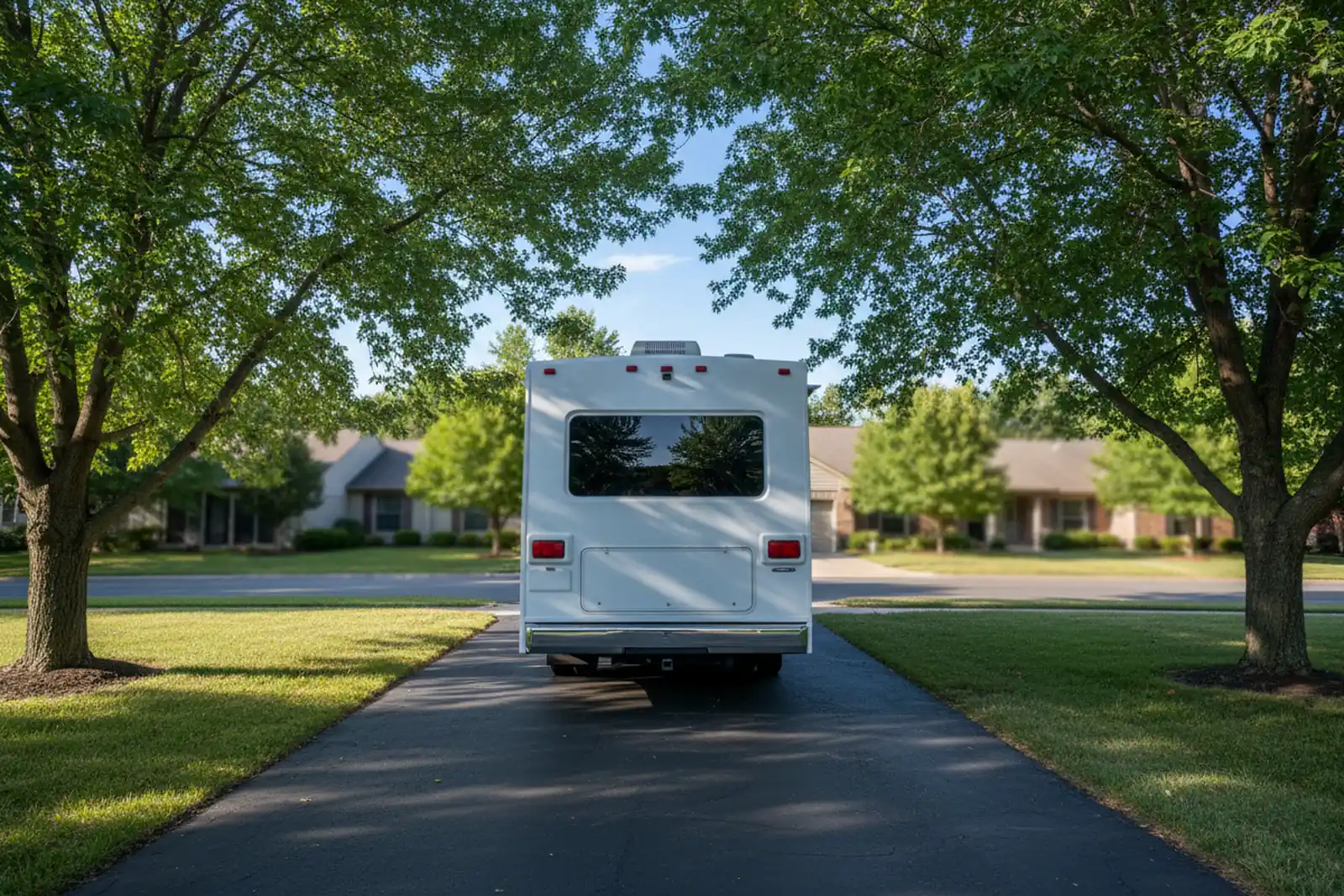
How to check what your rig is worth this week
Start with J.D. Power’s RV values and get the baseline for your make, model, year, and condition. Then open three marketplaces and search for that model with the same slide count and length. Write down the asking prices. Ignore the ones that have been listed for six months.
Then call two dealers and ask for a trade-in range, not a commitment. Tell them you might buy from them, which changes the conversation. A dealer I found through RV dealers across Indiana quoted me $1,800 more than one in Idaho for the same Class C, purely because the Indiana lot was short on that floor plan and had a buyer waiting.
If your selling private, price it above the trade-in offer but below the dealer retail number. You’ll get nibbles from bargain hunters. Ignore them. The serious buyer will show up with a flashlight and a checklist, which is exactly what you want.
The number moves with the season and local demand, so don’t lock in too early. Check the value in the season you plan to sell. Spring and early summer bring more buyers for family rigs. The number changes, but the one thing that never changes is what I’m about to tell you.
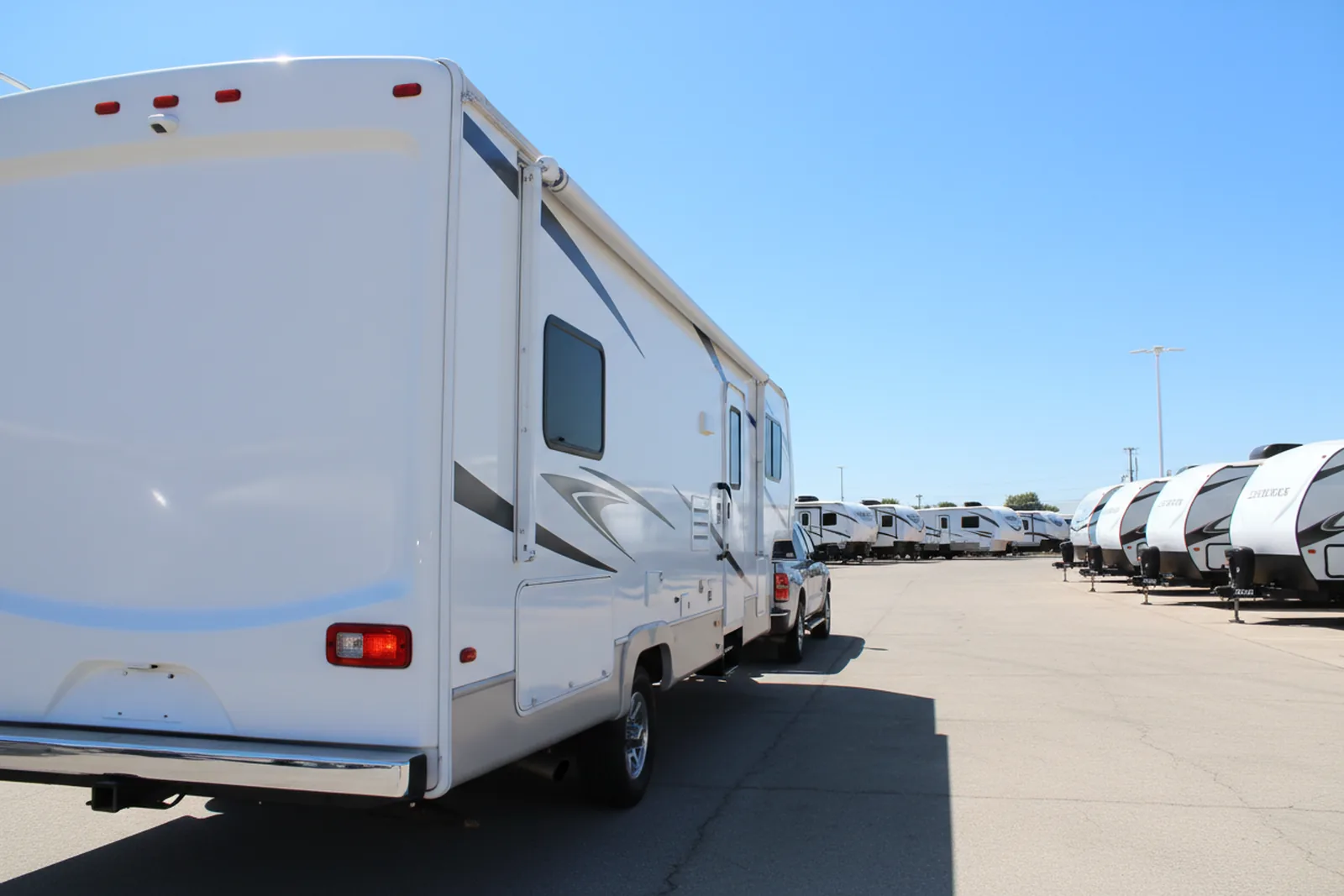
My one piece of advice: buy the dry roof, not the dream
Depreciation will take its cut no matter what you do. The question is whether you choose the size of that cut or let the market choose for you. I’ve sold three rigs, and the only one that didn’t sting was the one I bought with a moisture meter in hand and a folder of records from the previous owner.
This weekend, pull up a value guide and run the numbers on your own RV. Then call a dealer or two and ask for a written trade-in number. Even if you’re not selling for three years, knowing where you stand on the curve is a form of insurance. What I’d tell my younger self: never sign for a new rig until I’ve checked the same floor plan two years old at a big discount, and never believe a shiny countertop is worth the interest it costs you.
Related reading
FAQ
How fast does an RV depreciate?
Fastest in the first few years, then the curve flattens. A commonly repeated ballpark is around 20 percent or more in year one and roughly half after about five years, but those are rough figures, not data. Type, brand, floor plan, condition, mileage and the market at the time all move the real number a lot.
Do motorhomes depreciate faster than travel trailers?
Motorhomes usually lose more dollars because they cost more to begin with, and they have an engine and chassis aging too. Towables lose value as well. Whether one loses a bigger percentage depends on the model and market, so check comparable listings and a value guide for the exact rig instead of trusting a rule of thumb.
Where can I look up what my RV is worth?
Start with J.D. Power, which took over NADA Guides and is what many dealers and lenders use. Then compare listings for the same year, floor plan and slide count near you, and get trade offers from two or three dealers. The real value is where those numbers cluster, not the single highest one.
Can I write off RV depreciation on my taxes?
Not on an RV you use personally. Depreciation is not a deduction for personal-use property. If the RV has sleeping, cooking and toilet facilities and secures the loan, the interest may be deductible as a main or second home if you itemize. Business use is a different situation. Ask a tax pro before claiming anything.
What slows RV depreciation the most?
Condition. No water damage, a clean roof, records for every repair, covered storage and no smoke or pet smell help resale more than anything else you control. A popular floor plan helps too. Buying a rig that's a few years old lets the first owner absorb the steepest part of the drop.
Is it smart to take a long loan on an RV that depreciates this fast?
It raises the risk of owing more than the rig is worth for years. A long term lowers the payment but the balance drops slowly while the value falls fast, so you can end up upside down when you want to trade. A bigger down payment or a shorter term keeps you closer to even.
Find RV dealers near you
Compare new and used RV dealerships in your city, then ask a few what they have in stock.
Browse by stateOr jump to: Salem, OR · Anchorage, AK · Reno, NV