How to Negotiate RV Price: A Former RV Salesman's Step by Step
By Wade Hollister · October 21, 2026
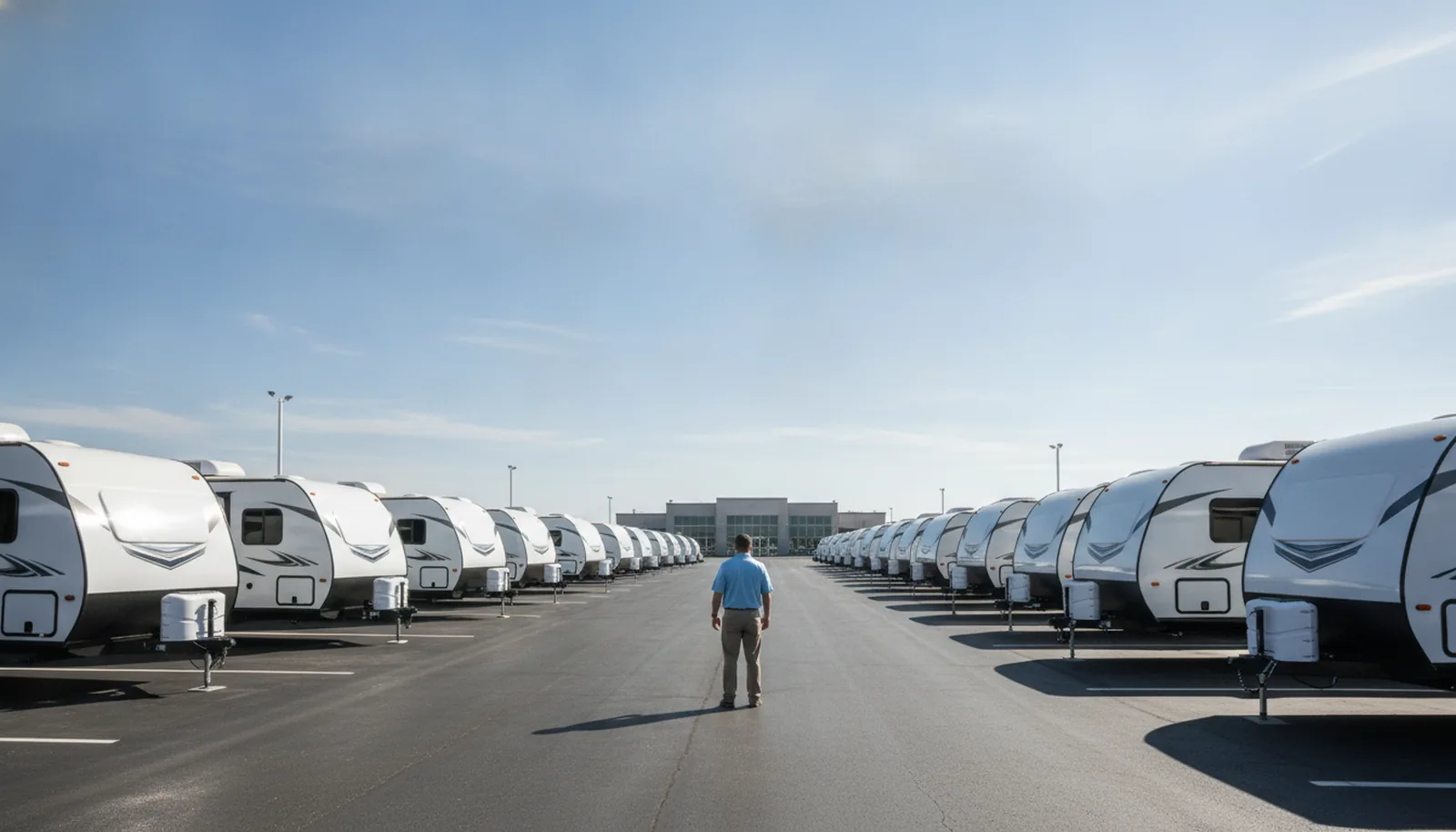
Last October I sat in my 2019 27-foot travel trailer at Lake Bob Sandlin, drinking coffee while the AC ran full blast against a heat wave that didn’t want to let go of Texas. I’d bought that trailer two years before, and the memory was still fresh: the four-square on the desk, the manager tapping his pencil, the first number he wrote that made me wince even though I knew the game. (I still click through RV dealers in Oklahoma City now and then, just to see what the market’s doing.) If you want to know how to negotiate RV price, the sticker is make-believe and the monthly payment is a trap. Get written out-the-door quotes from two or three dealers, even a few hours away. Compare against the lots in your own town too. That written quote is your only real number.
Dealers make money four ways: the unit itself, your trade, the financing, and whatever they can bolt onto the deal. They like to stir those together so you can’t tell where one ends and the next begins. I’ll show you the order I used when I sold, and what I’d do if I was on the other side of the desk now.
Research the exact unit and get written quotes from at least two dealers
The only thing that works is a competing quote in writing for the same or a similar unit. MSRP on an RV is usually set way above what units actually sell for, and the discounts run deeper than anything you see on cars. But there’s no magic percentage. Never haggle against one sticker.
- Pick the exact rig: year, make, model, floor plan.
- Email or call 3 dealers within a day’s drive. Ask for an itemized out-the-door price in the email itself.
- Ask about dealer fees, freight, prep, and any add-ons already bolted on. Read our post on RV dealer fees to know wich ones are junk.
One Saturday in Fort Worth, a buyer walked in and laid three printed quotes on my desk without saying a word. That was the whole negotiation right there.
Next: get your trade-in number straight before you ever set foot on the lot.
Negotiate the trade-in separately, after the price of the unit
The biggest mess I saw on the lot: a couple would grind me for two hundred bucks off the sticker on a fifth wheel and think they’d cleaned up, while the desk was buying their trade three grand under what it was worth. They lost the deal and never knew it.
Negotiate in this order:
- Price of the new (or used) unit, out the door.
- Trade-in value, shown as it’s own line on the buyer’s order.
- Financing terms.
- Add-ons.
Watch the difference between the negotiated price and the trade allowance. Not the monthly payment. In a lot of states the sales tax only applies to that difference, so check you’re state’s rules. If you still owe on the old rig, get a payoff quote from your lender and make sure the dealer actually pays it off. Don’t take their word for it.
Next: timing matters more than most people think.
Time the market like a leftover buyer
Late fall into winter is when the lot gets quiet and the dealer gets motivated. RV sales run on seasons and model years. Leftover units start piling up when the new model year ships, usually mid-calendar-year, and every one of them is costing the dealer money just sitting there.
End of month, quarter, and year puts extra heat on a sales manager to hit his numbers. I’ve seen units dropped an extra two grand on the last Saturday of December becuase the floor plan interest was due and that particular travel trailer had been baking on the lot since July. Our post on the best time to buy an RV goes through the seasons, and it’ll tell you why a winter walk-through means making them de-winterize before you test the water.
But no calendar beats local inventory. Check online how long the same unit has been listed.
Next: the four-square ain’t a worksheet. It’s a blender.
How to negotiate RV price: beat the four-square
You beat the four-square by negotiating one box at a time and refusing to talk about the others. The four-square on a sales desk has four boxes: price, trade, down payment, monthly payment. The salesperson pushes numbers from one box to another to keep you happy while the gross stays where the dealer wants it. The finance box hides a markup. The trade box hides a lowball.
Say this exact sentance when things start to blur:
“I’ll pay $43,500 out the door for the unit, with my trade shown at $18,000, no extended service contract, and I’ll finance through my credit union if you can’t beat the rate they quoted me on the same 144-month term.”
That shuts the blending down cold. The manager will still run his numbers, but you’ve set the order and he knows it.
Never tell them your target monthly payment. A lower payment is usually just a longer loan with more interest baked in. Do the loan math at your kitchen table before you go.
Next: here’s the list I’d print and carry in my pocket.
Printable negotiation checklist for the walk-in
Print this and bring it with you. Work the boxes in order.
- Written out-the-door quote for the exact unit from another dealer, in my hand.
- Dealer’s itemized out-the-door price on paper: unit price, all dealer fees, sales tax, title, registration, any add-ons.
- Asking: what are the doc, prep, and freight charges on this unit?
- Trade-in offer shown as a separate line, after we’ve agreed on the unit price.
- Payoff amount from my lender, if I have a loan, and a promise on the buyer’s order that the dealer will pay it off.
- Financing: APR, term, total interest, and no prepayment penalty, from the dealer and my credit union side by side.
- Reject every add-on package (sealant, nitrogen, etching, service contract) or price them separately.
- Read the buyer’s order line by line before signing. No blank lines, no promises not written down.
- Walk-though scheduled before delivery, on shore power, water connected, and de-winterized if it’s cold.
- “We owe” form signed for any missing part or fix not done before I drive away.
Safety: never sign a purchase agreement with blank spaces on it. In most states, once you sign, there’s no cooling-off period. The Federal Trade Commission’s three-day rule don’t apply to vehicles bought at a dealership’s place of buisness.
Next: the buyer’s order is where they get you if you’re not reading.
I found this video from RVtravel that walks through negotiating a lower price, and it echoes a lot of what I learned on the lot.
Read the buyer’s order like a closing attorney
The buyer’s order is the whole deal on one page, every dollar and every promise, so read it line by line before you sign anything. It is not a receipt. Dealers make mistakes, and sometimes the mistake always seems to favor the house.
Lines I’d squint at:
- Vehicle price: exactly what you shook on, no bump.
- Trade-in in allowance: what you agreed to, no hidden deduction.
- Doc fee, prep fee, freight: itemized, and you allready asked about them.
- Sales tax and registration: match your state’s rules; ask if anything looks high.
- Any add-ons you didn’t agree to. They get slipped in.
- Financing terms: APR, term, amount financed, total interest, if you took dealer paper.
- No blank lines or “subject to” language that lets them change terms later.
Next: you can do a lot of this from your kitchen table, by email.
Walk away politely, then let the market compete
The door is your best tool. Be pleasant about it, but be ready to thank them and leave. A dealer who thinks you’re about to slip away will usually sharpen the pencil in a hurry.
I watched a buyer stand up, shake my hand, and head for the door. My manager chased him into the lot with an offer two grand better than what I’d been told to pitch. The guy had a printed quote from a lot three hours up the road for the same trailer, and we either matched it or watched him drive off. We matched it.
Distance doesn’t kill the trick, either. A buddy of mine who moved east got three emailed quotes from RV dealers in Charlotte, North Carolina before he set foot on a single lot, and he bought from the one that wasn’t closest.
Next: one honest thought after eleven years on the lot.
The one number I’d change if I bought again
If I was buying my travel trailer again tomorrow, I’d settle the out-the-door price before a single word about trade, financing, or add-ons. I’d have two written quotes sitting in my email, one from a dealer at least two hours away. And I’d walk away twice, just to watch the manager’s face when I did it.
Here’s a small test. This weekend, look up dealers within three hours of you for the exact rig you’re shopping. Send the same email to three of them:
“Please send me your best out-the-door price on stock number X, itemized, by Tuesday.”
Print the two best. Carry them into the dealer with you. That one hour of email beats any trick I ever learned from the sales desk.
If you’re still deciding
FAQ
What is a realistic discount off MSRP on a new RV?
There is no fixed percentage. Discounts off MSRP on RVs are often much larger than on cars, but they vary by model, model year, demand, season, and how long the unit has sat on the lot. The only reliable benchmark is a written out-the-door quote from another dealer on the same or comparable unit. Use that to negotiate.
Should I negotiate by monthly payment or total price?
Total price first, broken down into unit price, trade-in, financing, and add-ons. Negotiating by monthly payment lets a dealer extend the loan term or hide a rate markup, so you pay more in interest over the life of the loan. Know the APR and term, not just the payment.
Can I cancel an RV purchase after signing?
Generally no. Once you sign a purchase agreement at a dealership, there is no automatic right to cancel. The FTC's three-day cooling-off rule does not apply to vehicles bought at a dealer's place of business. A few states have narrow exceptions. Read the buyer's order carefully before signing, and never sign a blank form.
What is a four-square in RV sales?
A worksheet with four boxes: price, trade-in, down payment, and monthly payment. A salesperson shifts numbers between the boxes to make a deal feel good while protecting the dealer's gross profit. Buyers should negotiate one number at a time and not fall for a low payment that hides a long term or low trade value.
When is the best time of year to negotiate an RV price?
Late fall and winter are usually slower for RV sales, and dealers may discount leftovers more aggressively. Model-year changeovers happen mid-calendar-year, so outgoing models often get marked down. End of month, quarter, and year can add pressure on sales managers to hit targets. Local inventory levels matter most.
Should I trade in my old RV or sell it myself?
A dealer trade-in offer is usually below what you'd get in a private sale, because the dealer has to recondition, hold, and resell the unit for a profit. But in many states you only pay sales tax on the difference between the new price and the trade allowance, which narrows the gap. Get a real offer first, then compare.
Find RV dealers near you
Compare new and used RV dealerships in your city, then ask a few what they have in stock.
Browse by stateOr jump to: Phoenix, AZ · Sacramento, CA · Elkhart, IN