RV Dealer Instant Trade-In Appraisal: The Honest Truth
By Wade Hollister · November 1, 2026
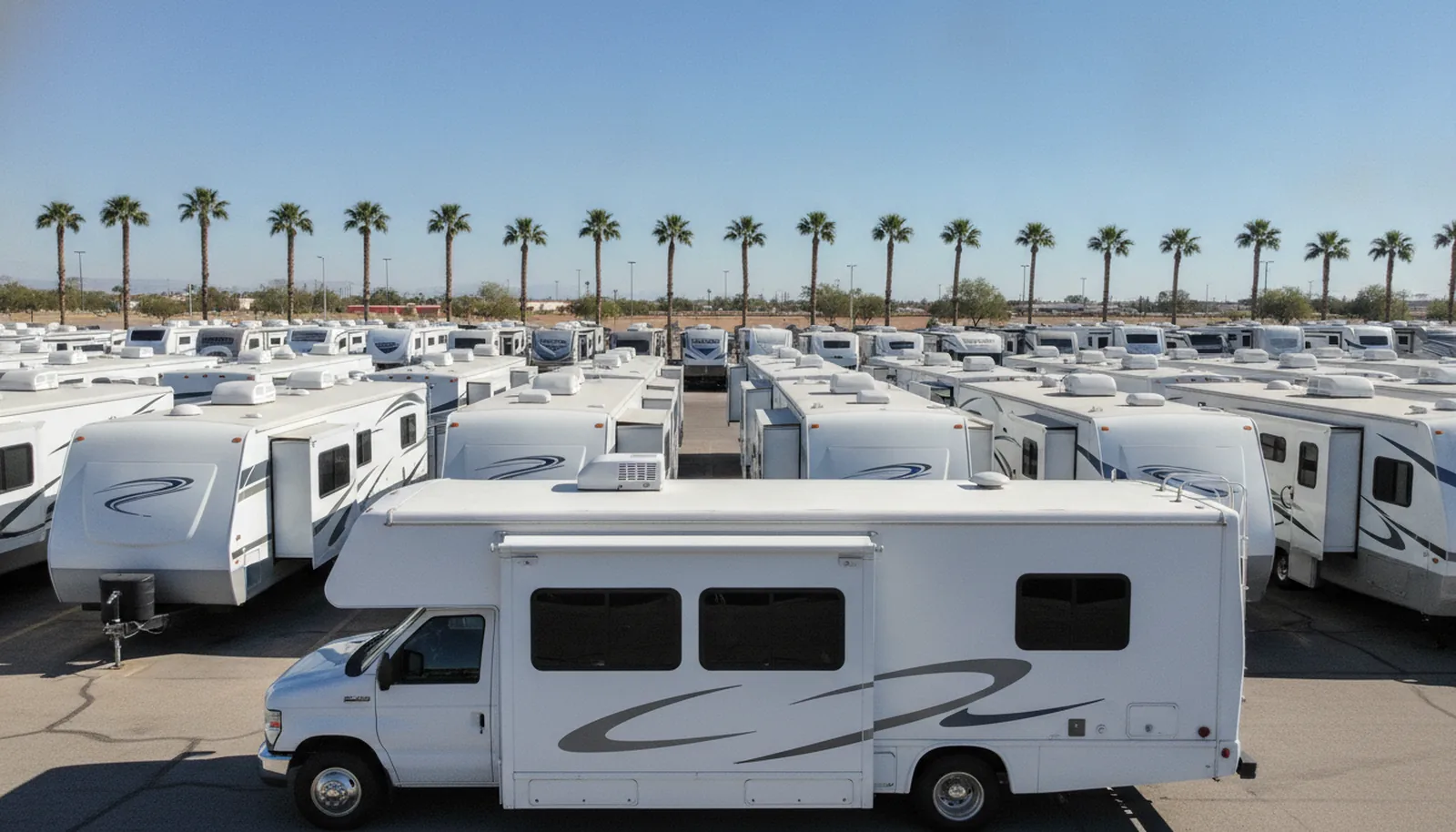
Last April I sat in the driver’s seat of my 27-foot travel trailer in a rest stop off I-20 near Abilene, staring at an email from a dealer’s website like the used RV dealers in Phoenix I’d been poking around on. I’d entered the year, make, floor plan, and mileage into their tool, uploaded six photos, clicked submit. Same dance you’d do with Class A motorhome dealers in Phoenix. Twenty minutes later they came back with $18,400. That number is what this post is about, because when I pulled the rig onto their lot two days later the final offer was $14,700. That gap is the dirty little secret of the RV dealer instant trade-in appraisal, and I’m going to walk you through it.
Back when I sold RVs in north Texas, the internet leads were a hot potato. The sales manager would squint at the form and the photos and say, “Quote ‘em eighty percent of book. Get ‘em in.” We never expected the online number to stick. We expected it to get you in the door. So when you use one of these tools, know the game you’re sitting down to play.
If you’re shopping from Phoenix, a smarter move is to compare what a few used motorhome dealers in Phoenix will actually put on paper after they see the unit. But first, let’s talk abotu that first number from a website, and how it stacks up against RV consignment in Phoenix.
What is an RV dealer instant trade-in appraisal?
It’s a lead tool, not a purchase agreement. It’s a form on a dealer’s website or an online RV buying service. You punch in year, make, model, floor plan, mileage or towable lenght, and condition. Some ask for photos. Within minutes or hours you get a range or a single number, and they’ll call it an ‘offer’ or an ‘appraisal range.’
The catch: nobody has laid eyes on your unit. The number is a computer’s best guess, pulled from a value guide or auction data and trimmed so the dealer has room. When I worked the desk, online leads were cold calls. The real appraisal started when the rig pulled onto the lot.
If you store a rig here in the Valley, compare that online number to a walk-in appraisal from RV dealers across Arizona or camper van dealers in Phoenix. Both will give you a real number after somebody actually looks at it.
How the online number is built (and why it moves)
The first range comes from the basics: make, model, year, and a general condition bracket like ‘clean,’ ‘average,’ or ‘rough.’ Some tools ask for the VIN and pull a vehicle history report. But no algorithm can smell a musty mattress, find a soft spot by the entry door, or hear a slide motor groan.
The online number usually assumes two things: the unit is above-average for its age, and you’ll bring it to the dealer’s lot. Both get tested in person. Here’s what moves the number after inspection:
- Condition deductions: Every scratch, stain, cracked sealant line, or worn tire gets a dollar figure.
- Reconditioning costs: The service department writes an estimate for what they’d have to do before putting it on the lot. That comes straight off the offer.
- Transport and pickup terms: If you’re not driving it in, the dealer factors in the cost to fetch it. If you’re trading on a unit they have to order, the whole deal shifts.
- Market demand: A toy hauler in Tucson in October might pull more than the same unit in July. The online tool doesn’t read the local market like the sales manager does.
I’ve watched online offers drop twenty to thirty percent after inspection, especially on units over six or seven years old. The gap isn’t a bait-and-switch by law because the number is labeled an estimate. Feels like one though, and that’s why you need a plan.
If you own a Class A or a big diesel pusher, the inspection goes deeper. Most Class A motorhome dealers in Phoenix will send a senior tech up on the roof and check generator hours before they’ll commit to anything.
Instant online offer vs. walk-in dealer appraisal vs. private sale
The spread is always the same shape: private sale highest, online quote in the middle, final dealer offer lowest. I kept a little notebook when I was selling. One column for the online quote, one for what the desk actualy offered after I crawled under the unit, one for what a private buyer might pay. Here’s a cleaner view:
| Method | Speed | Final number | Who does the work |
|---|---|---|---|
| Instant online offer | Hours | Usually a range, not a final price; expect 10-30% less after inspection | You enter data and photos |
| Walk-in dealer appraisal | 1-2 hours on the lot | Lower than private sale, but often higher than the online range after negotiation | Dealer appraiser and sales manager |
| Private sale | Days to months | Highest price, but you handle calls, showings, and paperwork | You |
The online number works as a floor, not a ceiling. If the dealer’s online tool says $20,000 and their in-person offer is $15,000, you’ve got a written range to push back against. That’s about the only time I’d call it an ‘offer.’
For a deeper look at how dealers build the in-person number, our post on RV trade in value: how dealers price your rig and how to get a fair number breaks down the appraisal sheet line by line.
If you’re in the Phoenix area and leaning toward consignment instead, RV consignment in Phoenix can net you more then a trade-in, but it takes longer and the dealer takes a cut.
This video from CarEdge breaks down how dealers really determine trade-in value, worth a watch before you head to the lot.
How to use the online appraisal to your advantage
Treat the instant offer as a data point, not a destination. Here’s my method, honed from years of watching the desk work:
- Get the number in writing. The online responce is an email; save it. If a dealer gives you a number over the phone, ask them to text or email it. If they won’t, walk.
- Do your own homework. Look at comparable listings within 200 miles. A clean, low-mileage unit of the same floor plan should list for 10-20% above the dealer’s online quote, or that quote is low.
- Bring the online quote to the lot. When the manager starts subtracting for every rock chip, say, ‘Your website quoted me $18,400 before I drove 60 miles. What changed?’ Make them itemize.
- Get the final offer in writing before you leave. A handshake quote means nothing. I’ve seen numbers move between the sales floor and the finance office.
If you haven’t seen the fees that get tacked on at signing, our post on RV dealer fees: doc, prep, freight and the add-ons to question is worth a read before you step on any lot.
The payoff problem: if you owe money, read this part carefully
If you have a loan on your RV, the dealer has to pay off the lender before they can resell it. That process can wreck an otherwise good trade.
When I was on the desk, we’d call the lender for a 10-day payoff quote. The trade-in allowance in the contract got split: part to the payoff, part as credit toward your new unit (or a check back to you if the trade value beats the payoff). The problem comes when you’re upside down. Say you owe $22,000 and the dealer’s final offer is $18,000. That $4,000 of negative equity comes out of your pocket in cash or gets rolled into the new loan. Rolling it in means paying interest on it for years.
Before you even start an online appraisal, call your lender and get that payoff figure. Write it on a sticky note and keep it in your pocket. When the manager slides the worksheet across the desk, you’ll know exactly where you stand.
The number in your email is not the number in the contract
I’d bet a cold beer no dealer’s website will ever hand you the highest number you could get. The online tool is a filter to seperate serious sellers from tire-kickers, and to pull you in with a number they can ratchet down later.
So use it as a floor. Print the online quote, tuck it in your glovebox, and go into the dealership like you’re at a garage sale: friendly, patient, and holding a number you won’t go below.
This weekend, pick two dealers near you that sell your type of RV. Use their online tools, then call and ask for a walk-in appointment. Compare the two final written offers. If they’re more than ten percent apart, something’s off, and you’ve got room to move.
If you’re still deciding
FAQ
Is an online RV trade-in offer legally binding?
No. An online instant offer is almost always an estimate or range,not a contract. The final number is determined after a physical inspection at the dealership. Without a signed purchase agreement, the dealer isn't obligated to honor the initial figure. Get any final offer in writing before you drive there.
Why did the dealer lower the online offer after I brought my RV in?
The online system couldn't see wear, water damage, or mechanical issues. The dealer's appraiser may deduct for reconditioning costs, tire age, soft spots in the floor, or unlisted repairs. Sometimes the lower number is also a negotiation tactic. Ask for an itemized list of deductions and compare it to the condition you reported.
Can I sell my RV to an online buying service without visiting a dealer?
A few online buyers will purchase sight unseen but most still require an inspection at your location or a drop-off point. The price is usually below private-party value but above dealer trade-in. Read the pickup terms: some services deduct transportation fees if the unit is far from their hub.
What is the difference between an online appraisal and a dealer trade-in value?
An online appraisal is a rough estimate based on data entry and photos. The dealer's actual trade-in allowance is set after a physical inspection and includes deductions for reconditioning, market demand, and profit margin. The final trade-in number is offen 10-30% lower than the online quote, and it's the only number that counts in the contract.
How do I know if an online RV offer is fair?
Compare the offer to at least three listings of similar units for sale within 200 miles. If the dealer's online quote is below the typical private-party asking price by more than 20-30%, it may be low. Also get a second opinion from a walk-in appraisal at another dealer. A written itemized breakdown is the best way to judge fairness.
Can I use an online appraisal to negotiate a private sale price?
Yes. If a private buyer is haggling, show them the dealer's online offer as evidence of wholesale value. Then point out that a private sale saves them the dealer's markup and fees. The online number can also serve as a floor: if the dealer's final offer is lower, you may be better off selling privately.
Find RV dealers near you
Compare new and used RV dealerships in your city, then ask a few what they have in stock.
Browse by stateOr jump to: Sacramento, CA · Elkhart, IN · Oklahoma City, OK