Buy Here Pay Here RV Dealer: What the $489 Payment Really Buys
By Wade Hollister · November 1, 2026
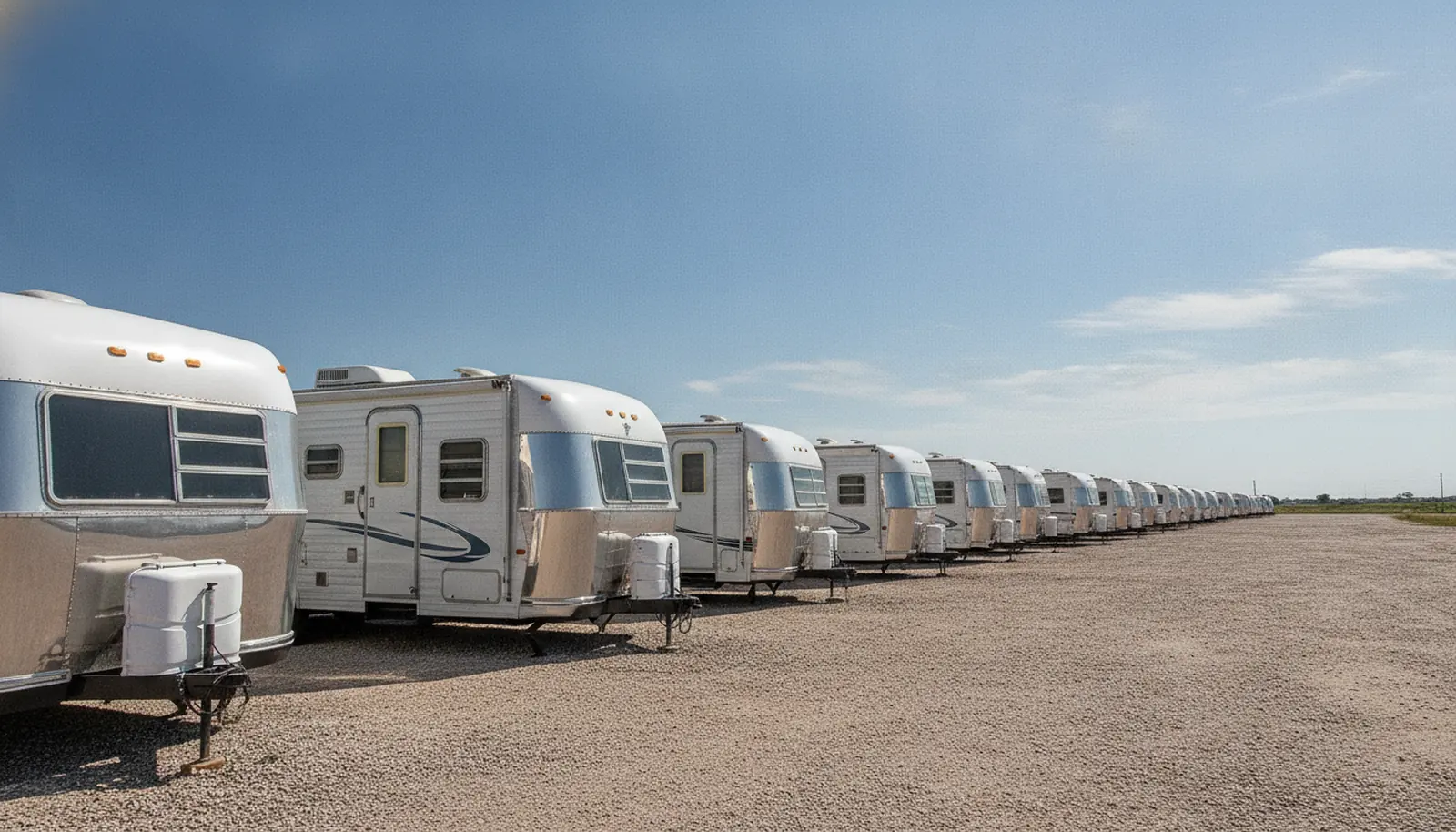
Last July I sat at the picnic table at the KOA in Grapevine with a cup of coffee, and a couple two sites over backed in a 2008 fifth wheel. We got to talking. They were paying $489 every two weeks at a buy here pay here used RV dealer in Fort Worth off East Lancaster. I sold RVs for eleven years on two lots in north Texas, and that number made me set my cup down.
If your bank has said no, you might be eyeballing one of these in-house finance lots. Before you sign, compare at least two or three used RV dealers in Fort Worth. Ask for a written out-the-door price on the same floor plan. That first payment number you hear is rarely the whole story. If you’re looking at smaller rigs, camper van dealers in Fort Worth may have different pricing.
How a buy here pay here RV dealer actually works
The dealership itself is the lender. At a regular dealer, the F&I office sends your credit app to banks, credit unions, specialty RV lenders. A buy here pay here dealer is diffrent because you make your payments to the lot, often weekly or biweekly, and the dealer holds the lien.
Some in-house lots put a GPS tracker or a starter-interrupt device on motorhomes. Miss a payment by a few days and, depending on the contract and state law, the rig may not crank. Repossession terms can be quicker than a bank becuase the dealer can act on its own contract, but state law and the contract control the timeline. So read the fine print for repossession and late-fee language before you sign anything.
The same towable or Class C sitting on a traditional lot may be older and priced higher here. The dealer is taking a bigger risk. I saw this every week at my old dealership. Across the highway from us there was an in-house finance lot, and half the trailers on it were former rentals with faded decals and soft spots in the floor. They moved those units, tho, because nobody else would approve those buyers. When I compare, I start with used RV dealers nationwide. For a second price check I look at class a motorhome dealers in Fort Worth. It’s worth a look at motorhome dealers in Fort Worth too. I also keep pop up camper dealers in Fort Worth open in another tab.
The real reasons people choose in-house financing
A bank turned them down. That’s the short answer. Maybe a bankruptcy two years ago, a thin credit file, or a repo on a car loan. For those buyers, in-house financing feels like the only door open.
There is one genuine upside. If the dealer reports your payments to the credit bureaus, on-time monthly or biweekly payments can help rebuild your credit. But you have to ask. Many buy here pay here lots don’t report to the bureaus, which makes the loan nearly useless for your credit score. Ask it just like this: “Do you report to Equifax, Experian and TransUnion, and can I get that in writing?”
Speed is the other reason. You can usually drive off the lot the same day. No waiting on a bank’s underwriter. For a family needing a place to sleep at a job site next week, that matters.
I found this quick video that explains the basics of buy here pay here financing for cars, and the same ideas apply to RVs.
In-house financing vs a subprime lender vs a credit union with a co-signer
You can compare these without a dealer’s help, and you shoudl. Pull up used RV dealers nationwide to see how the same year and floor plan are priced at traditional lots that use outside lenders. Ask a credit union about a co-signed loan. You may find the numbers aren’t as hopeless as the in-house desk wants you to believe.
| What you compare | Buy here pay here dealer | Subprime lender through a regular dealer | Credit union loan with a co-signer |
|---|---|---|---|
| Who approves you | The dealer itself | A finance company, but the dealer arranges it | The credit union, with your co-signer’s credit |
| Payment schedule | Often weekly or biweekly at the lot | Monthly | Monthly |
| Typical inventory | Older units, sometimes former rentals or high-hour rigs | Newer used units, more choice | Newer used units, more choice |
| Effect on your credit | Only if the dealer reports to all three bureaus | Usually reported | Usually reported |
| GPS or starter-interrupt device | More common on motorhomes | Sometimes required by lender | Rare |
| Repossession speed | Often quick, per the contract | Varies by lender and state | Varies by state and credit union |
| APR and total cost | Usually the highest; get the total of payments in writing | High but usually lower than in-house | Often the lowest of the three |
What the in-house lot across the highway taught me
The in-house dealer near my old lot in north Texas had a row of travel trailers that looked washed out by the west sun. Faded awning fabric, cracked decals, brown streaks on the fiberglass. He priced a 2010 bunkhouse at $399 down and $169 a week for 156 weeks. That’s $26,764 in payments on a trailer a bank might book at a fraction of that retail. But he wasn’t selling a trailer. He was selling an approval.
Twice I saw the same couple bring back the same fifth wheel. First for a roof leak the dealer patched with lap sealant. Then for a slide that wouldn’t go out. Every time they brought it back, they were still making weekly payments. That’s the model.
If you go this route, get the cash price, the APR, the total of payments and the late and repo terms all in writing before you sign. If the dealer won’t show you an APR, that’s a red flag. Also read the as-is notice. In-house lots sell almost everything as-is, which means the water pump that quits in week two is your problem.
Questions to ask before you sign an in-house contract
I’d ask these six questions in this order, and I’d write down the answers on the back of the buyer’s order.
- What is the cash price of this exact unit?
- What APR are you charging me?
- What is the total of payments if I make every payment on time?
- Do you report to all three credit bureaus, and can I get that in writing?
- Is there a GPS tracker or starter-interrupt device on this unit, and what happens if I’m a day late?
- What are the late-fee and repossession terms, and where are they in the contract?
If the salesperson says the unit was just reconditioned, ask to see the service ticket. That forces the lot to show you what was actually done. If the ticket says “roof sealed” but you see cracked caulk around the vents, you know the kind of operation you’re dealing with.
When to walk away from a buy here pay here RV dealer
Walk if they won’t show you the numbers in writing, if they push a payment plan without ever quoting an APR, or if they tell you the deal is only good today. None of that is true at an honest lot.
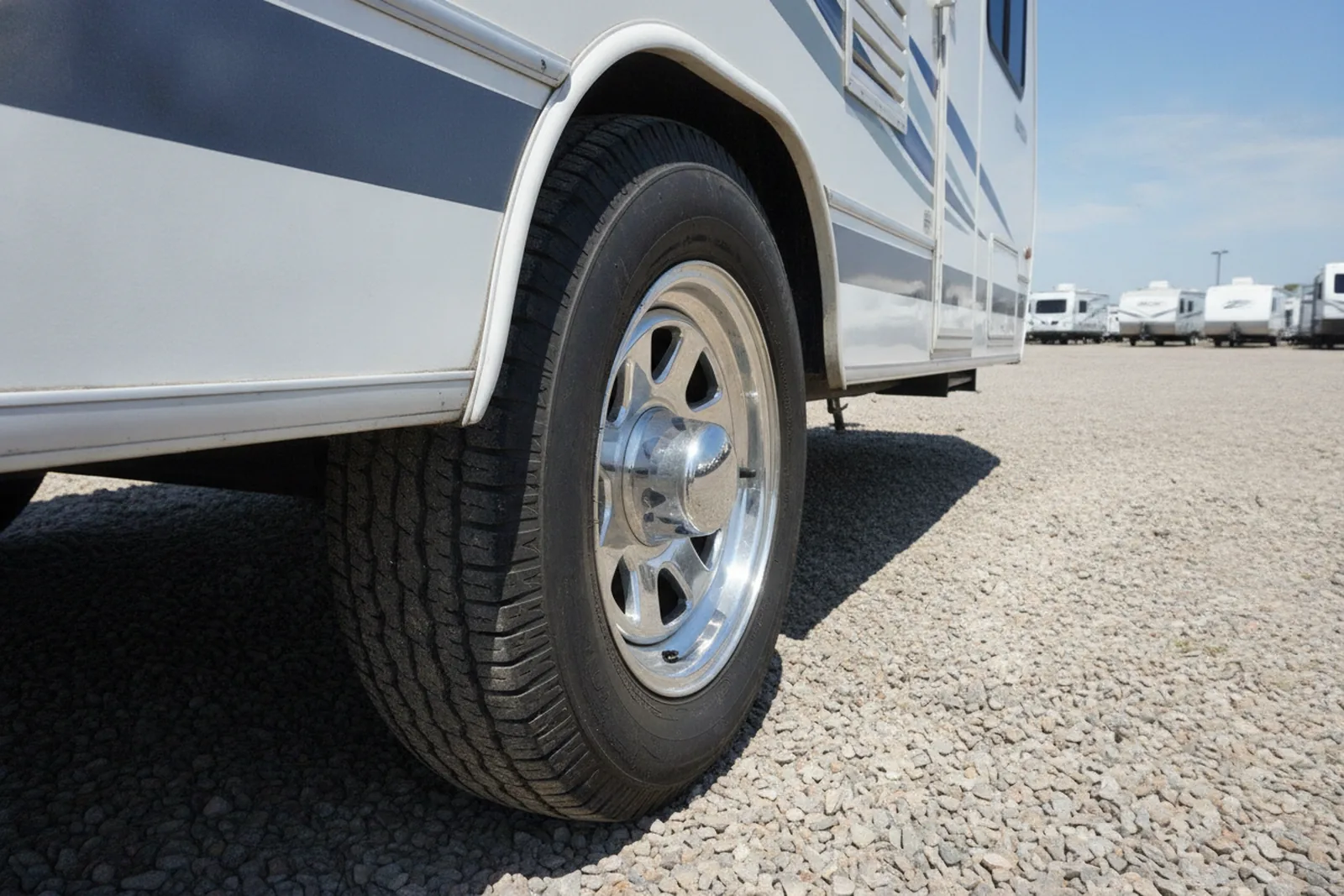
Walk if the unit has soft floors, a musty smell, or water stains around the roof vents. In-house lots are full of rigs that were traded in with problems the first dealer didn’t want to fix. You dont want to finance a roof rebuild at a high in-house APR.
Also ask your own insurer for a quote before you buy. Some insurers won’t touch older RVs sold by buy here pay here lots. If you can’t insure it, you shouldn’t buy it.
Finally, compare against a couple of traditional lots. Ask a regular dealer for a subprime quote, and ask a credit union about a co-signer. The best time to buy an RV is when you have three written offers, not one payment schedule.
What I’d do differently if I needed in-house financing tomorrow
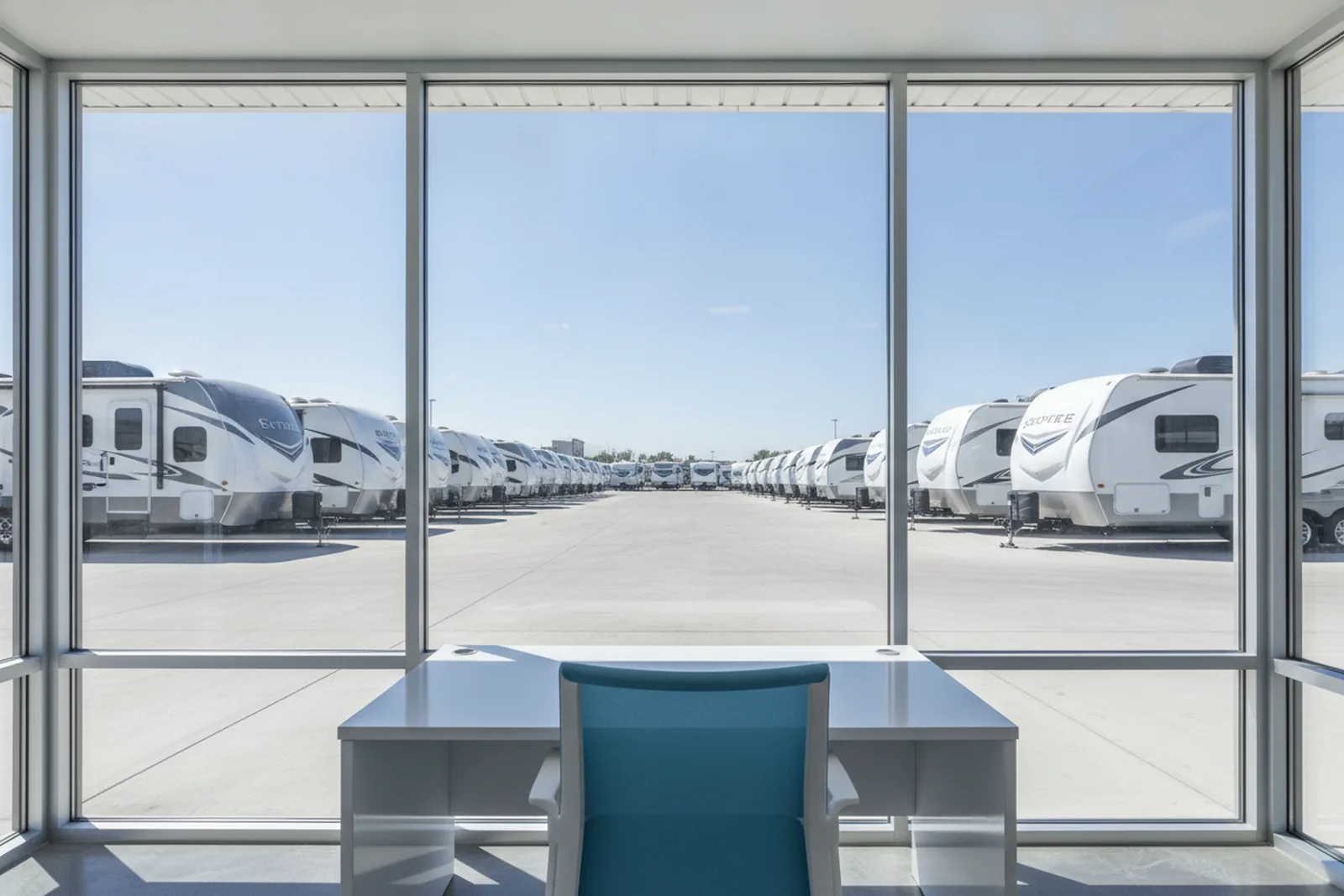
I’d start by pulling up camper van dealers in Fort Worth, pop up camper dealers in Fort Worth, and a couple of Class A and motorhome dealers in Fort Worth to see what’s actually on traditional lots on the same day. Then I’d call the in-house place and ask for the same six questions above. Next, I’d read our post on RV dealer fees so I know what junk charges to cross off the buyer’s order.
Then I’d make the in-house dealer put every number on paper and take it home. A dealer that won’t put it in writing isn’t going to honor it later.
If the deal still made sense, I’d push for the shortest term I could afford. Years of weekly payments on a depreciating trailer is a hole you don’t climb out of by trading it in. You climb out by paying it off.
The $489 test you can run this weekend
The couple at the KOA in Grapevine was paying $489 every two weeks. Over four years, that’s $50,856. Their fifth wheel woudl sell for far less private party on a good day. They weren’t buying equity. They were renting from the dealer with extra steps.
Here’s the test. Take any buy here pay here RV dealer’s weekly or biweekly payment, multiply it out to the full term, then compare that total to the cash price. If the gap makes you wince, that’s the cost of the approval. Then pull up two traditional used RV dealers near you and ask for a written out-the-door quote on the same floor plan with your credit application. If one of them says yes through a subprime lender at a lower total cost, you just saved yourself a bundle.
If you’re still deciding
FAQ
Do buy here pay here RV dealers report to the credit bureaus?
Some do, many don't. Ask before signing: "Do you report to Equifax, Experian and TransUnion, and can I put that in writing?" If the answer is no, the loan won't help rebuild your credit. If the answer is yes, on-time payments can help, but late payments will hurt.
Can I negotiate the price at a buy here pay here RV dealer?
Yes. The asking price on the windshield is the first number, not the last. Offer less. Ask for the cash price separate from any financing. If the dealer only wants to talk weekly payment, you're being sold a loan, not a trailer. Get the out-the-door price in writing.
Why do buy here pay here RV dealers use GPS trackers or starter-interrupt devices?
Because they're the lender and they want to find the rig or disable it if you stop paying. Rules vary by state, and some states restrict or require disclosure of these devices. Read the contract and ask directly before signing. If you're not told about a device and you find one later, that's a red flag.
Is a buy here pay here RV loan a good way to rebuild credit?
Only if the dealer reports to all three major credit bureaus and you make every payment on time. Ask for written confirmation before signing. Even then, the high APR and and short repossession leash make it a risky way to rebuild. A secured credit card or a small credit-builder loan at a bank is often safer and cheaper.
What should I inspect before buying a used RV from an in-house finance lot?
Check the roof and sealant, press floors for soft spots, look for water stains and delamination, run every appliance on shore power and propane, and read the tire DOT date codes. Many in-house units are former rentals or trade-ins with deferred maintenance. Get a profesional RV inspection if you can, and read the as-is notice carefully.
Can I trade in an RV I still owe money on at a buy here pay here dealer?
Yes, but you'll probably carry negative equity. The dealer will pay off your old loan and roll the difference into the new loan. That means your borrowing even more at the high in-house APR. Get the payoff quote from your lender and the new total of payments in writing before you agree to any trade.
Find RV dealers near you
Compare new and used RV dealerships in your city, then ask a few what they have in stock.
Browse by stateOr jump to: Dealers that buy RVs · Grand Junction, CO · Katy, TX · Byron, GA