When do new RV models come out? The answer affects prices
By Wade Hollister · November 1, 2026
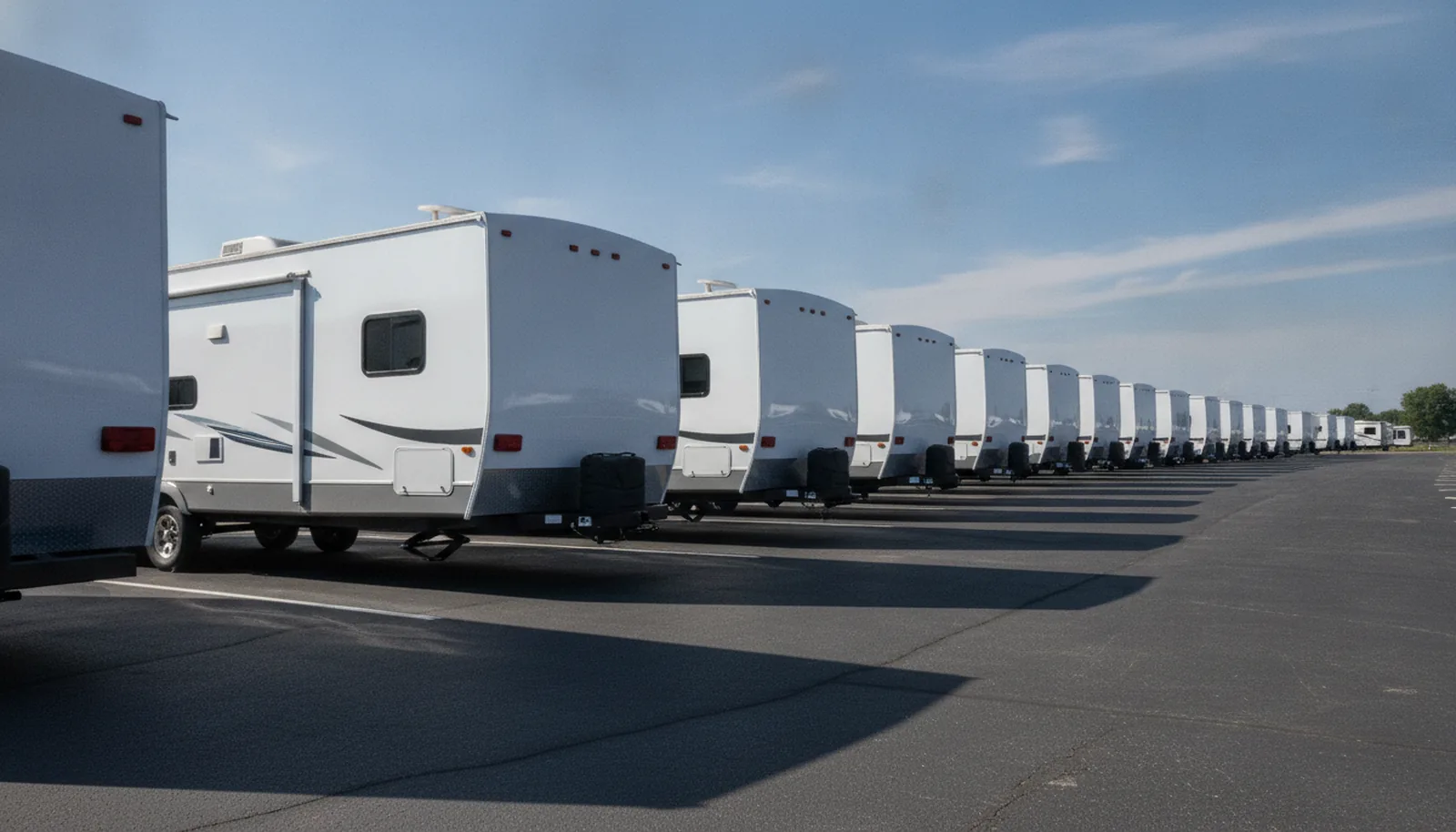
It was a Tuesday in late August a few years back, and I was standing in the service bay of the lot where I worked, watching a convoy of new travel trailers roll in off I-35W, the kind of units you see at travel trailer and fifth wheel dealers in Knoxville. When do new RV models come out? Right then, I learned: often when you least expect it. Sides still shiny from the factory wash. Stickers on the windows said next year’s model. I knew right then the game had changed. Any leftover unit on our lot from the previous model year was abotu to become a different kind of deal.
New RV models come out in a rolling wave, not one month, and that wave sets the prices on everything else around it.
If you’re shopping in east Tennessee, pull up a list of travel trailer and fifth wheel dealers in Knoxville, and if you’re after a smaller rig, check out camper van dealers in Knoxville too, and ask them straight up: what model year are you stocking, and what month did it land?
When do new RV models come out? The short answer is: it depends on the manufacturer
Some brands start shipping the new model year as early as May, and if you’re looking at Class A motorhome dealers in Knoxville, you might see those fresh units on their lots by early summer.
You’ll see a mix on most dealer lots. Last year’s floor plans sit next to this year’s units that arrived in July, and motorhome dealers in Knoxville offen have a similar spread.
The practical side of it: if you want the newest tech and the freshest build date, ask the dealer which model year you’re looking at and when it came in. The same floor plan might be sitting there with a lower number on the windshield, and pop-up camper dealers in Knoxville may have leftover models from last year at a discount.
Before you drive across the state to compare, look at RV dealers across Tennessee and call two or three.
How RV model years actually work (and why the build date matters more)
A model year is a marketing label, not a birthday.
And here’s why that matters. A ‘new’ RV that sat on alot for 14 months already has tires that are over a year old, and RV tires often need replacing around five to seven years regardless of miles.
Mid-year changes are another wrinkle. A manufacturor might switch faucets, inverters, or even floor plans in February without changing the model year. Two units with the same sticker and same year can have different equipment. If you’re comparing prices between dealers, make sure you’re comparing the same build date and the same spec sheet.
But if you’re hunting for a new unit in Knoxville, the camper van dealers in Knoxville and the Class A motorhome dealers in Knoxville both carry units that sat through different seasons. Ask to see the data plate on any rig you’re serious about.
What ‘new’ means when the unit was built a year ago
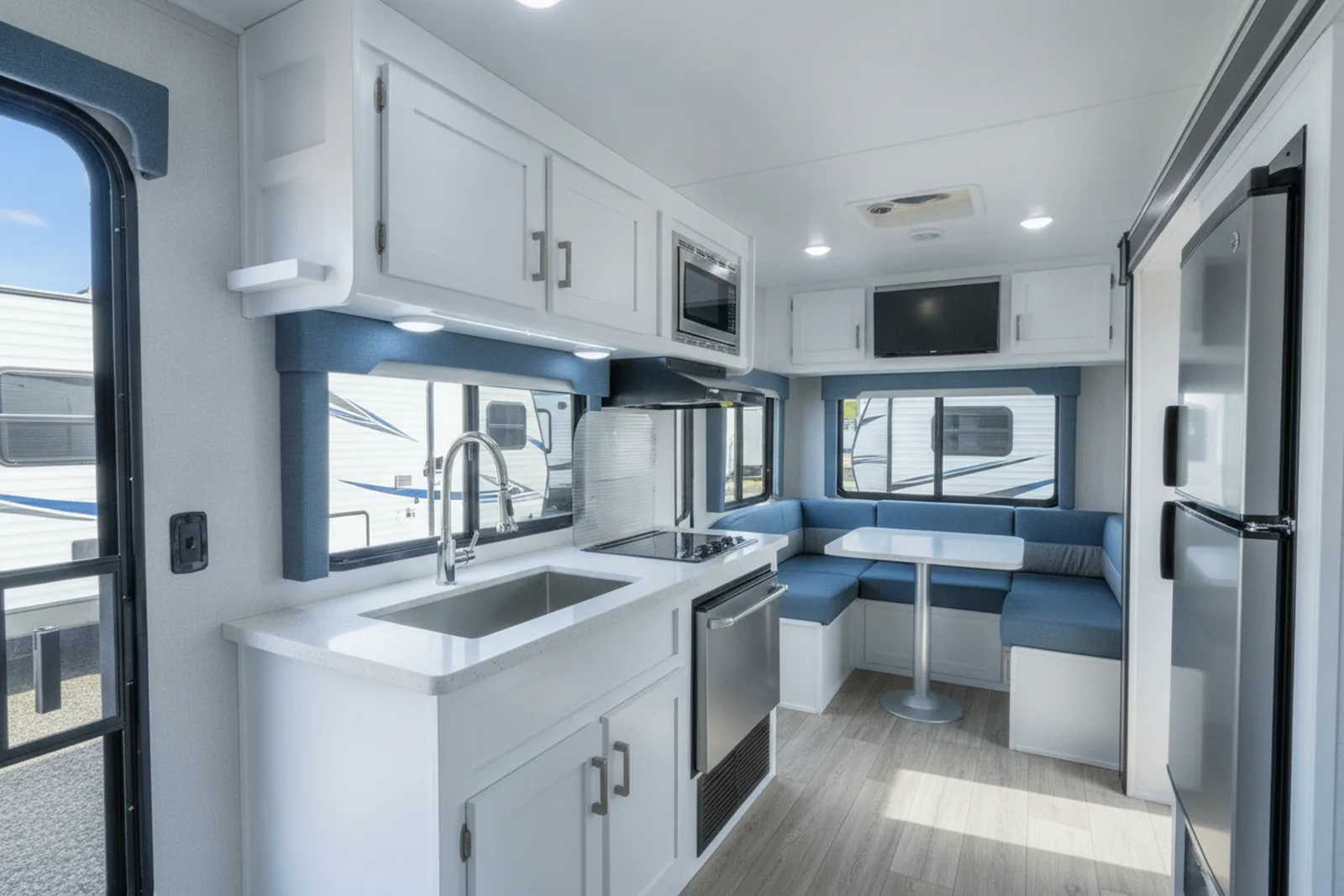
On an RV lot, ‘new’ means never titled, not freshly built. It might have faded decals, a dead battery, sun-baked sealant, and tires with a year of age on them already.
Dealers floor-plan their inventory, which means they pay interest every month a unit sits. That’s why leftovers get discounted. A unit that’s been on the lot through two winters has cost the dealer real money in flooring costs. The sales manager knows exactly how much, and he’s ready to sharpen his pencil when you walk in.
But the discount isnt free. That year of sitting means the roof sealant has been through a Texas summer or a Tennessee winter, and the slide seals might be dry. Ask for a fresh inspection and a written list of what the dealer will fix before delivery. Get it on a we-owe slip.
Before you commit, pull up motorhome dealers in Knoxville and ask what they charge for a pre-delivery inspection on a year-old unit. Some dealers include it. Others want $400 and a signature.
The model year changeover and the seasons: a quick table
Here’s how the model year switch lines up with the best time to buy. I’m speaking from eleven years of watching the lot fill and empty, and from the times I’ve seen my own sales manager mark down old stock to make room for the new arrivals.
| Season | What’s on the lot | Dealer motivation |
|---|---|---|
| Spring (March–May) | Mixed: last year’s leftovers and early new units | Moderate. They want to sell, but the busy season is coming and they’ll hold price for a while. |
| Early summer (June–July) | New model year arrives at many brands; last year’s units become leftovers | High on leftovers. The desk wants them gone before the new ones get old. |
| Late summer / fall (Aug–Oct) | Full mix: new model year, a few stragglers from last year, some mid-year builds | Highest on leftovers. The RV show season is coming, and every old unit is costing interest. |
| Winter (Nov–Feb) | Leftovers sit; new orders slow down | Variable. If the dealer needs floor space or cash, you’ll hear about it. But fewer shoppers means less competition for the deal. |
The bargains are not on the hottest new model. They’re on the unit that’s been there since befor the last RV show. That’s where the manager’s pencil moves.
For a longer look at seasonal patterns, skim our post on the best time to buy an RV. It lines up with what I saw on the lot, but the model year changeover adds it’s own rhythm to the year.
Josh the RV Nerd explains the best time to buy an RV, and it lines up with what I saw on the lot.
What I learned the week the new units arrived
The third week of August, a load of new travel trailers showed up at 10 a.m. On a Thursday. By noon, the sales manager had a list of every leftover unit on the lot with his rock-bottom price written in pencil next to each one. He told the salespeople: if you can get a buyer to sign before the weekend, I’ll throw in a free sway control kit and fill the propane.
That’s the desk’s playbook. When new model years land, the old ones become a liability. Floor plan interest keeps ticking, and every day a leftover sits is a day it’s harder to sell at full margin. The manager isn’t losing money at that point. He’s cutting his losses and making room.
So what do you do? Walk in and ask for both prices: the new model year and the prior year on the same floor plan. If the difference is five thousand dollars and the changes are just a different countertop and a new awning motor, the leftover might be the better buy.
Compare those numbers between dealers. If one dealer in east Tennessee is sitting on three leftovers and another has none, you’ll feel the difference in the first quote. When I shop for parts or talk to pop up camper dealers in Knoxville, I always ask what’s been on the lot the longest. That’s where the deal lives, but only if the unit checks out.
How to check a leftover unit before you buy it
A leftover is not a problem until it’s ignored. Here’s what I do before I’d put my own money on a unit that’s been sitting since last summer:
- Pull the entry door open and press the floor all the way around the dinette, the bathroom, and the front of the slide. Soft spots are water damage. Walk away if you feel any.
- Get on a ladder, or stand on the roof if it’s rated for it, and run your fingers along the sealant around every vent, skylight, and the AC. Cracked, peeling, or missing sealant means the roof has been cooking in the sun for a year. Make the dealer reseal it.
- Read the DOT code on every tire. Four digits, week and year. If the tires are over two years old, negotiate a discount or ask for new ones. RV tires time out.
- Test the slide in and out three times. Listen for grinding. Check the slide seals for cracks and daylight.
- Run the water pump with city water unhooked, and check under every sink and behind the access panels. A year of dry seals can cause leaks on the first fill.
- Turn on the furnace for five minutes in summer, and the AC for five minutes in winter. Both can be tested regardless of the outside temperature.
That checklist is just the start. I put the full version in my used RV inspection checklist, and most of it applies to a new unit that’s been sitting.

My honest take: the model year is a game, and you can play it
The best deal on any RV lot is not the newest model year, and it’s not the oldest. It’s the prior model year that’s still unsold in late fall, when the dealer has already made room for the new stuff and the flooring costs are eating at his margin.
I’d rather buy a well-inspected leftover with a few cosmetic compromises and put the savings into a better hitch, a lithium battery, and a year’s worth of campground fees. The model year on the title doesn’t show up in you’re campsite photos.
More from the lot
FAQ
When do new RV models come out?
RV manufacturers roll out new model years on their own schedules, often starting in late spring and continuing through fall. Some brands ship the next year's units as early as May, others in August or later. There is no single release month accross the industry. Ask the dealer which model year you are looking at and when that unit arrived on the lot.
How do I read the build date on an RV?
Look for a data plate, usually inside the entry door or in a cabinet, which shows the manufacture date, VIN, and sometimes the model year. The tire DOT codes give the week and year each tire was made. A unit built months before its model year is normal, but the build date tells you how long it has been sitting.
Is a year-old new RV a good deal?
It can be. The unit is still untitled, so it qualifies for new-unit financing and the full factory warranty, but the dealer has been paying floor plan interest on it. That pressure often leads to a bigger discount than on a just-arrived unit. Inspect the roof, tires, and floor for age, and get any fixes in writing.
What is the best time of year to buy a new RV?
Late fall and winter are typically slower for RV sales, and dealers are more willing to discount. The model year changeover adds another window: when new units arrive in summer or early fall, last year's models get marked down. Combine the two by shopping leftover prior-year units in November or December.
Should I negotiate on a leftover RV the same way as a new one?
Yes, but with more room on the dealer's side because the unit has been costing them interest. Ask for the out-the-door price in writing, compare it to the current model year price, and negotiate the unit price first. Don't let the dealer hide the discount by inflating your trade-in or adding fees.
How long do RV tires last, even if the RV is new?
RV tires often need replacement around five to seven years from thier manufacture date, regardless of tread depth. A 'new' RV that sat on a lot for a year already has tires that are a year old. Check the four-digit DOT code on each tire, and if they are older than two years, negotiate a replacement or a price adjustment.
Find RV dealers near you
Compare new and used RV dealerships in your city, then ask a few what they have in stock.
Browse by stateOr jump to: Sacramento, CA · Elkhart, IN · Oklahoma City, OK